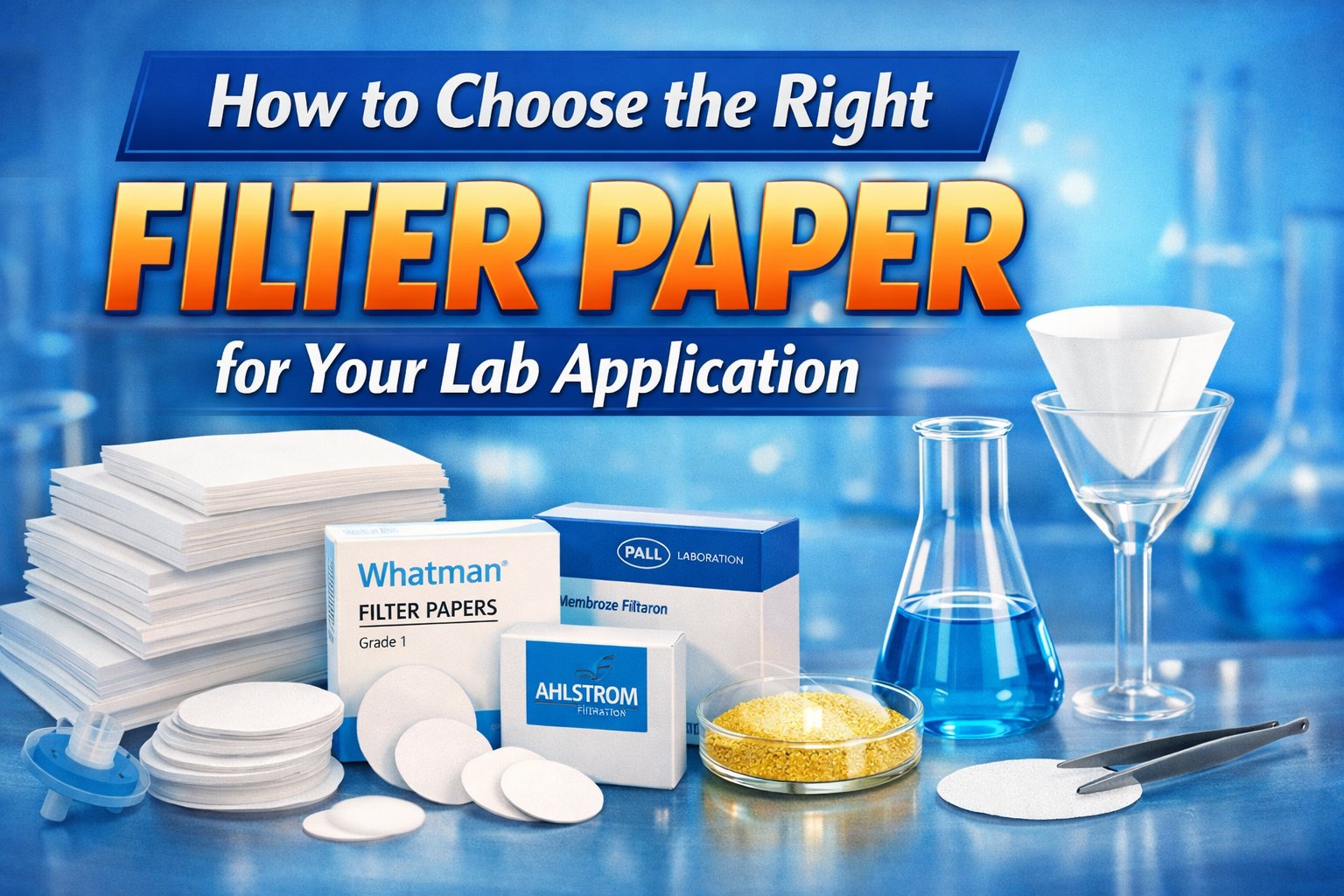
Key Takeaways
-
The right filter paper depends on your application type (qualitative vs quantitative), target particle size, chemical environment, and required filtration speed.
-
Choose qualitative filter papers for routine separations where residue mass isn’t critical; switch to quantitative filter paper for gravimetric analysis requiring ash content below 0.01%.
-
When working with high temperature samples, aggressive chemicals, or fine particles, move to glass microfibre filters or quartz fibre options.
-
Pore size, flow rate, and ash content are the three core specifications to check first on any datasheet.
-
Proper handling, correct sizing, and standardizing filter grades across your lab prevents common issues like bypass, tearing, and contamination while improving reproducibility.
Introduction: Why Filter Paper Choice Matters in 2026 Labs
Filter paper underpins routine work across teaching labs, QC facilities, environmental monitoring stations, and process industries in 2026. From gravimetric sulfate determination to heavy-metal residue testing in water and routine clarification of reaction mixtures, the filtration process touches nearly every analytical workflow. Explore high-quality options from our laboratory filter paper collection
Poor filter selection can skew results, extend filtration times by over 30% of workflow duration, or compromise regulatory compliance with standards like ISO/IEC 17025 and EPA methods. A mismatched grade might allow particle breakthrough in environmental testing or introduce ash contamination that biases trace residue results by several percent.
Step 1: Match Filter Paper Type to Your Analytical Goal
The first decision in selecting filter material comes down to three main families: qualitative papers, quantitative (ashless) papers, and specialized fibre filters. Each serves distinct analytical techniques.
Ask yourself: “Do I care more about identifying what’s present, or about weighing how much is present?”
-
Qualitative papers work for separating solids and clarifying liquids when precise residue mass isn’t needed
-
Quantitative papers are essential when you’re performing chemical analysis that requires igniting and weighing the residue
-
Specialized filter papers (glass fiber, quartz) handle extreme temperatures or aggressive chemicals
-
Always check your method (ASTM, APHA, AOAC, pharmacopeias) since it often prescribes the filter type. Browse our qualitative filter paper options for routine lab filtration. For precise results, view quantitative ashless filter paper for gravimetric analysis
Qualitative Filter Papers: For Routine Separation and Identification
Qualitative filter papers serve general-purpose separations where residue mass isn’t being measured precisely. They’re the workhorses for clarifying buffer solutions, filtering precipitates before spectroscopy, and separating precipitates in teaching experiments.

Common grades include medium retention papers around 11 µm pore size for general work. These qualitative papers feature low but non-zero ash content, typically under 0.13%, which is acceptable for non-gravimetric work where you’re identifying substances rather than quantifying them. A widely used example is Whatman Grade 1 filter paper for general laboratory use
-
Medium flow grades filter at 10-20 mL/min/cm², balancing filtration speed with clarity
-
Wet strength variants with resin treatment handle vacuum filtration up to 0.5 bar without tearing
-
High absorbency makes them suitable for various applications in food testing and beverage industry QC
Quantitative (Ashless) Filter Papers: For Precise Gravimetric Work
Quantitative filter paper is engineered to burn off almost completely during ignition, leaving residue below 0.01% (often 0.007% or less after 450-900°C in muffle furnaces). This makes them indispensable for gravimetric analysis. For accurate residue testing, consider ashless filter paper for gravimetric analysis applications
Specialised Fibre Filters: When Standard Cellulose Isn’t Enough
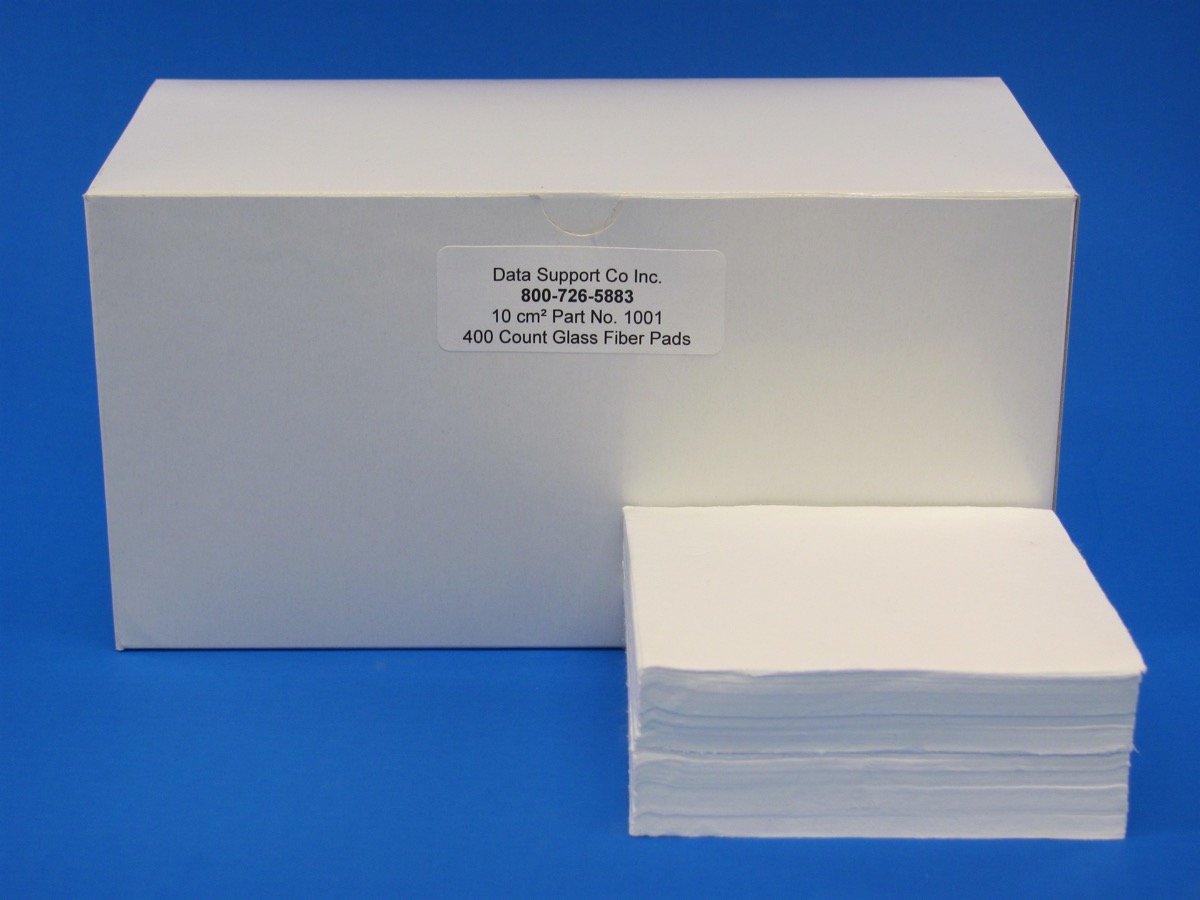
Glass microfibre filters and quartz fibre filters support high temperature work, aggressive chemical environments, and fine particle tasks where standard cellulose fails. Made from borosilicate glass, these filters handle temperatures exceeding 500°C. For extreme applications, explore glass microfiber filters for high temperature filtration
These specialized options suit EPA-style air pollution monitoring, hot gas filtration, and fine colloid removal. Glass fiber filters offer high loading capacity (200-500 mg/cm²) and chemical resistance across pH 2-14.
-
Quartz fibre extends temperature tolerance to over 900°C for flue gas analysis
-
Most glass fiber options are binderless above certain grades, avoiding organic contamination
-
These filters aren’t typically weighed directly unless methods specifically validate their blank mass
Step 2: Understand Core Specifications (Pore Size, Flow Rate, Ash Content)
Most filter papers list pore size (or particle retention rating), flow rate, basis weight, thickness, and ash content on their datasheets. These specifications form your decision framework.
-
Pore size indicates the minimum particle size effectively captured (nominal rating in µm)
-
Flow rate measures time to filter a standard volume—tighter retention inevitably slows filtration
-
Ash content ranges: qualitative <0.13%, quantitative <0.01%, glass/quartz <0.5%
-
Basis weight (60-120 g/m²) and thickness (0.15-0.3 mm) influence mechanical strength and loading capacity
Compare different grades in our laboratory filtration products and filter media collection
Step 3: Consider Your Sample Matrix and Chemical Environment
The nature of your sample—aqueous solutions, organic solvents, strong acids, viscous liquids, or hot solutions—drives material choice. Chemical compatibility determines whether your filter survives contact with the sample. For aggressive chemicals, check chemical resistant laboratory filters and glass fiber filters

Temperature and pH Limits of Different Filter Materials
Cellulose papers tolerate approximately 120°C wet and 180°C dry. Glass microfibre filters withstand high temperatures exceeding 500°C, while quartz handles over 900°C in air—critical for scientific research involving hot slurries or acid digests.
For pH, cellulose remains stable between pH 2-9 for continuous use. Glass and quartz fibre filters handle extremes (pH 1-14) where cellulose would degrade. Prolonged exposure to strong oxidizers like concentrated nitric acid will destroy cellulose and bias your results.
Handling Oily, Viscous, or High-Particulate Samples
Oils, syrups, and heavily loaded suspensions demand stronger papers or glass microfibre filters with high loading capacity. Creped or embossed papers increase surface area for viscous sample filtration.
-
Use pre-filters (coarse papers or glass fibre pads) before a fine finishing filter to prevent contamination
-
Select thicker, high wet strength papers for vacuum filtration of industrial samples
-
Diluting viscous samples 2-5x can dramatically improve flow rates
Step 4: Choose the Right Grade, Size, and Format
Once type and filter material are chosen, specific grade of filter paper, diameter, and form factor must fit your apparatus and method. Grades represent proprietary balances of pore size, speed, and strength. Find multiple sizes in our circular and sheet filter paper for laboratory applications
Wrong sizing leads to folding issues, sample bypass, or overhang that tears under vacuum. Cross-reference tables help when switching between brands for rigorously tested equivalents.
Size, Diameter, and Form Factor
Main shapes include circular discs, rectangular sheets, folded circles, and extraction thimbles. Pick disc diameter relative to funnel size—the disc should be slightly smaller than funnel diameter (e.g., 90 mm for 100 mm buchner funnel) to prevent channeling.
-
Pre-folded (fluted) papers increase effective surface area 60%, speeding gravity filtration 2-3x
-
Extraction thimbles (25x80 mm typical) suit Soxhlet systems for fat and oil analysis
-
Cutting from sheets saves 30-50% versus pre-cut discs but increases contamination risk
Step 5: Align Filter Paper Choice with Regulatory and Method Requirements
Regulated tests in environmental testing, pharma, and food safety often specify filter type, ash level, and pore size. EPA 40 CFR Part 136 mandates GF/C (1.2 µm) for TSS; USP <921> requires ashless papers for residue work.
-
Document filter grade, lot number, and pre-treatment (ignition at 500°C) in lab records for audits
-
Validate or verify methods when switching brands, comparing recoveries and blanks side-by-side
-
Ensure high quality filter papers from suppliers providing lot-traced materials. Ensure compliance by sourcing high quality laboratory filter papers with lot traceability
Case Example: Tightening Heavy Metal Residue Testing
A water testing lab improved precision in gravimetric metal analysis by switching from qualitative to ashless 2.5 µm papers. The result: metal residue variability dropped 15% (standard deviation from 5% to 4.2%).
The lab updated SOPs to specify ashless filters, dual ignitions at 500°C, and acceptance criteria for blank mass below 0.05 mg. This systematic approach demonstrates how small filter optimizations deliver reliable results in sensitive applications.
Best Practices for Handling, Using, and Storing Filter Papers
Even high quality filter papers fail if mishandled, contaminated, or poorly stored. Proper handling prevents common issues that undermine optimal performance.

Storage and Shelf-Life Considerations
Store filter papers in closed boxes in a dry environment (30-60% relative humidity) away from direct sunlight. Keep them in a cool, dust-free cupboard at 15-25°C.
-
Label opened packs with date and lot number
-
Rotate stock first-in, first-out to prevent contamination
-
Keep specialized filters (quartz for low-level monitoring) in sealed containers
Usage Tips for Reliable Filtration
For specific tasks requiring precision:
-
Pre-wet the paper with solvent matching your filtrate to ensure full funnel contact
-
Use powder-free gloves or clean tweezers for trace analytical applications
-
Replace papers when flow slows dramatically or the surface is fully loaded
-
Rinse retained solids using small volumes (1-2 mL portions) to transfer all analyte
Pair medium-fast papers with gravity funnels for teaching labs; use strong, fine papers with buchner funnel setups for lab-scale production needing fast filtration.
Frequently Asked Questions
Can I reuse filter paper in the lab?
Most cellulose and quantitative filter papers are strictly single-use. Retained solids, chemical changes, and micro-damage alter particle retention and filtration efficiency on subsequent uses. Teaching labs might occasionally reuse coarse papers for non-critical demonstrations, but never for analytical work. Glass and quartz fibre filters used in air pollution monitoring may sometimes be pre-fired and re-used only if specifically validated by the method—which is rare.
How do I choose between membrane filters and traditional filter paper?
Membrane filters offer precise pore sizes down to 0.2 µm with absolute ratings, while most filter papers have broader pore distributions but higher flow rates. Microbiological sterility tests and particulate counting typically require membranes. Bulk solid-liquid separations—separating solids from liquids in large volumes—use traditional paper. Consult your method to determine if membranes are mandated for fine particles or sterility concerns.
What should I do if my filtration is too slow or keeps clogging?
Move to a coarser grade, use a pre-filter, reduce sample volume per run, or dilute viscous samples. Check for proper funnel setup and adequate vacuum level. Ensure the paper isn’t creased in ways that block flow. Document successful combinations of grade and apparatus so your lab can standardize on them for similar samples across the vast range of materials you process.
Does filter paper expire, and how can I tell if it’s no longer usable?
While many papers don’t have strict chemical expiry, long-term storage in poor conditions causes brittleness, discoloration, or odour. Inspect for yellowing, mold spots, warping, or unusual smells before use in sensitive analyses. Follow manufacturer-stated shelf life (typically 5-10 years optimal), particularly for specialized or pre-treated papers used in regulated testing.
How do I safely dispose of used filter papers from different applications?
Disposal should follow your lab’s chemical hygiene plan and local regulations, treating papers as contaminated with whatever they filtered. Benign aqueous residues often suit normal lab waste. Segregate biological, radioactive, and chemically hazardous papers into respective waste streams for incineration or specialized treatment per OSHA and RCRA requirements.