Introduction
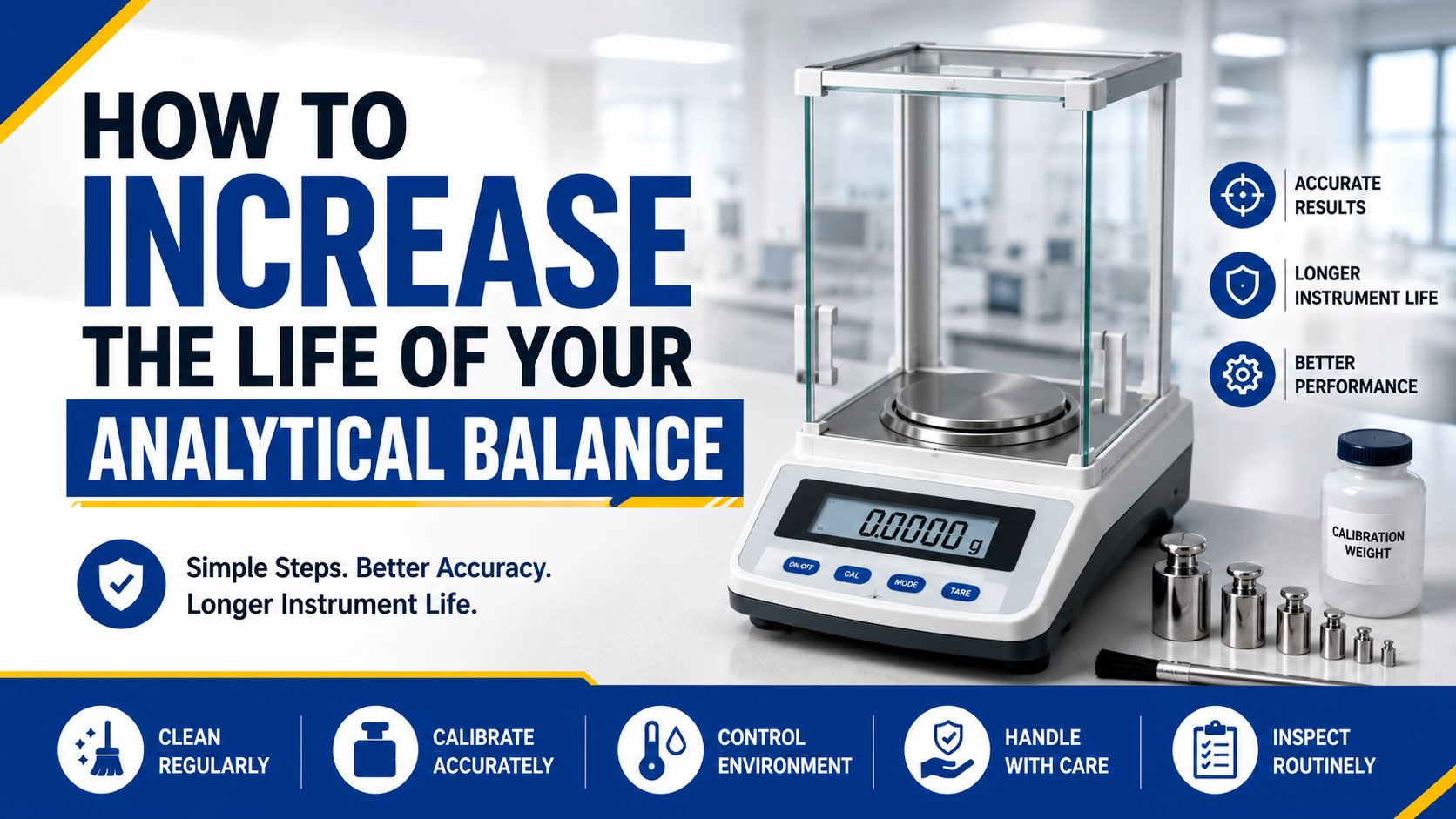
To increase the life of your analytical balance, follow a consistent routine of daily cleaning, routine calibration, proper environmental control, careful handling, and preventive maintenance. Analytical balances are among the most valuable and precise instruments found in modern laboratories, especially in pharmaceutical research, chemical analysis, biotechnology, food testing, universities, and quality control laboratories where even the smallest measurement errors can affect product quality, experimental results, and day-to-day lab efficiency. Because these instruments measure with a readability as fine as 0.1 mg (0.0001 g), they require proper care, regular maintenance, and correct operating procedures to maintain long-term accuracy.
This guide outlines the practices laboratory personnel should use to protect balance performance and extend service life, including daily start-up checks, cleaning procedures, calibration methods and frequency, environmental placement, proper handling, storage and transport, routine inspections, professional servicing, documentation, and troubleshooting. Extending the life of an analytical balance is not difficult, but it does require consistency to reduce repair costs and keep weighing results reliable for years.
Quick Overview of Analytical Balances
Analytical balances are high-precision laboratory instruments designed to measure very small masses with exceptional accuracy. Unlike standard laboratory balances, analytical balances include draft shields, highly sensitive weighing sensors, and advanced calibration systems that minimize environmental influences.
They are commonly used for sample preparation, pharmaceutical formulation, chemical analysis, environmental testing, and research applications where precise measurements are essential. Choosing the correct analytical balance based on capacity, readability, and application helps reduce unnecessary wear while improving laboratory efficiency.
Daily Start-Up To Ensure Accurate Weighing
Every working day should begin with a quick inspection of the analytical balance before weighing any samples. Verify that the balance is level, clean, properly connected to power, and free from dust or debris.
Allow the balance to warm up according to the manufacturer's recommendations before taking measurements. Check that the weighing pan, draft shield, and display are functioning correctly. Performing these simple daily checks helps detect small problems before they affect weighing accuracy or require costly repairs.

Cleaning Your Analytical Balance
Keeping the analytical balance clean is one of the most effective ways to extend its service life. After each weighing session, carefully remove powders, liquids, or sample residue from the weighing chamber and weighing pan, and remove the weighing pan to clean any spills or residue underneath it.
Use a soft brush, lint-free cloth, or manufacturer-approved cleaning materials. mild detergent or isopropyl alcohol may be used when recommended by the manufacturer. Avoid excessive moisture, abrasive cleaning products, or harsh chemicals that could damage sensitive components. Routine cleaning prevents contamination while maintaining consistent weighing performance.
Calibration With Proper Calibration Weights
Calibration ensures that an analytical balance continues producing accurate measurements throughout its service life. Many modern balances include automatic internal calibration, while external calibration uses certified calibration weights to verify accuracy independently.
Use clean, certified weights and handle them with gloves or forceps when you perform calibration to support high accuracy and compliance requirements. Proper calibration reduces measurement uncertainty and prevents inaccurate laboratory results, and in highly regulated industries, daily calibration may be necessary.
Set Calibration Frequency For Analytical Balances
The frequency of calibration depends on laboratory requirements, instrument usage, applicable quality standards, and environmental factors. Laboratories may need to perform calibration daily in some applications, while routine work may use weekly or monthly checks.
Calibration should also be performed whenever the balance is relocated, after major temperature changes, following maintenance, or whenever measurement accuracy is questioned. Establishing a documented calibration schedule improves consistency while protecting long-term balance performance, and it should also record results from regularly checking the balance.
Maintain Environment For Accurate Weighing
Environmental conditions directly affect analytical balance accuracy and longevity. Stable room temperature, controlled humidity, minimal air movement, and low vibration create the ideal weighing environment, since temperature fluctuations can cause instability and stable ambient temperature and humidity help protect sensitive sensors. In addition, low humidity can worsen static electricity during sensitive weighing tasks. Using laboratory balances in a properly controlled laboratory helps protect sensitive sensors and ensures reliable weighing performance.
Humidity fluctuations can cause hygroscopic samples to absorb moisture and affect mass measurements.

Balances should be protected from direct sunlight, air conditioning vents, doors, windows, and heavy laboratory equipment, as vibrations can destabilize readings. They should also be kept away from nearby sources of electromagnetic interference and air currents. Maintaining a controlled environment reduces measurement drift while minimizing unnecessary stress on internal components.
Lab Balance Placement And Electrical Considerations
Correct installation is essential for reliable weighing performance. Analytical balances should always be placed on stable, vibration-resistant laboratory benches that remain level throughout daily operation.
Power should be supplied through a stable electrical source that minimizes voltage fluctuations. Using surge protection can help protect sensitive electronic components from unexpected electrical disturbances. Proper installation improves repeatability while reducing unnecessary wear on precision weighing systems.
Proper Use and Handling Procedures
Proper handling practices significantly increase the lifespan of an analytical balance. Never exceed the balance’s maximum capacity to avoid overload and sensor damage, and never place hot samples directly onto the weighing pan.
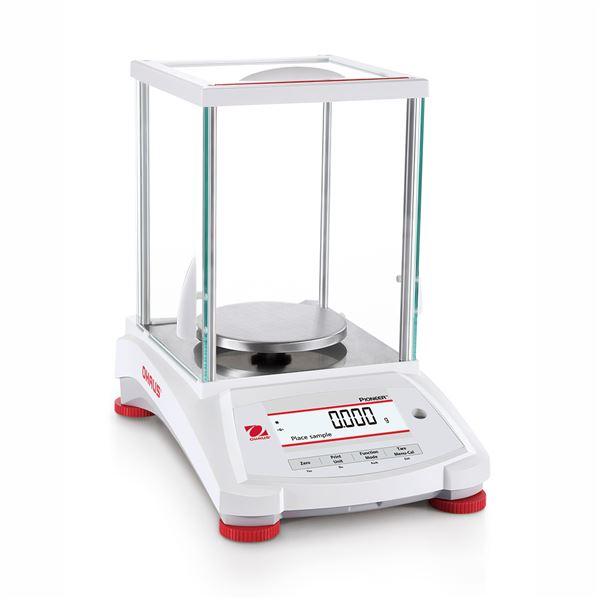
Always center samples on the balance pan and use appropriate weighing containers to avoid contamination. Laboratories requiring maximum precision often choose the OHAUS Pioneer PX Analytical Balance because it provides exceptional weighing accuracy and dependable performance. Well-trained laboratory personnel help reduce operator errors that may shorten equipment life.
Storage, Transport, and Long-Term Care
When an analytical balance is not in regular use, it should be stored in a clean, dry, dust-free environment with the draft shield closed.
If transportation is necessary, secure all moving components according to the manufacturer's instructions. Original packaging is often the safest option for protecting sensitive weighing mechanisms during transport. Proper storage prevents accidental damage while extending equipment reliability.

Routine Inspection and Professional Service
Routine inspections help identify minor problems before they become major repairs. Laboratory personnel should regularly inspect the weighing pan, draft shield, display, leveling feet, electrical cables, and calibration performance.
Annual preventive maintenance services performed by qualified technicians helps maintain factory specifications, with trained technicians making necessary adjustments to support performance across the balance’s full range while replacing worn components before failure occurs. Many laboratories rely on the Adam Equipment Solis Analytical Balance for long-term laboratory performance and easy maintenance.
Professional servicing significantly extends equipment lifespan and reduces unexpected downtime.
Document Weighing Data To Ensure Accurate Records
Maintaining complete weighing records improves laboratory quality management while helping identify long-term performance trends, including the balance’s division value where relevant for traceability.
Laboratories should record calibration results, maintenance activities, service reports, environmental conditions, operator information, and any unusual balance behavior.
Accurate documentation supports regulatory compliance while simplifying future troubleshooting and preventive maintenance planning. Accurate records are especially valuable when using precision balances for regulated laboratory applications.
Troubleshooting Common Analytical Balance Issues
Even well-maintained analytical balances may occasionally experience unstable readings or measurement errors.
As a practical point, the following steps help isolate weighing errors: verify balance leveling, check calibration status, eliminate air drafts and vibration, close the draft shield doors when zeroing the balance or taking a reading, clean the weighing chamber, allow samples to reach room temperature, and check for static electricity.
If measurement problems continue after routine troubleshooting, professional servicing should be arranged to inspect internal components.
Conclusion
An analytical balance is a long-term investment that delivers reliable performance when properly maintained. Daily inspections, regular cleaning, scheduled calibration, controlled environmental conditions, careful handling, and preventive maintenance all contribute to extending the life of the instrument while ensuring highly accurate weighing results.

By implementing these best practices, laboratories can reduce repair costs, improve measurement reliability, maintain regulatory compliance, and maximize the return on their investment. A well-maintained analytical balance not only lasts longer but also provides the consistent precision that modern laboratories depend on every day.
Frequently Asked Questions
How do you maintain an analytical balance?
To maintain an analytical balance, clean the weighing pan and draft shield after every use, keep the balance on a stable and level surface, and protect it from dust, air drafts, vibration, and direct sunlight. Perform regular calibration using certified calibration weights, inspect the balance for proper operation, and follow the manufacturer's recommended maintenance schedule. Routine preventive maintenance helps ensure accurate measurements and extends the life of the instrument.
How often does the analytical balance need to be calibrated?
The calibration frequency depends on the laboratory's requirements and how often the balance is used. Laboratories performing critical measurements often verify calibration daily, while others may calibrate weekly or monthly. The balance should also be calibrated after relocation, significant temperature changes, maintenance, or whenever measurement accuracy is in question.
How to adjust analytical balance?
Most modern analytical balances can be adjusted using the built-in internal calibration function or by performing external calibration with certified calibration weights. Before adjusting the balance, ensure it is level, clean, and placed in a stable environment free from vibration and air currents. Always follow the manufacturer's calibration procedure to achieve accurate and reliable weighing results.
What are the two types of analytical balance?
The two main types of analytical balances are internal calibration analytical balances and external calibration analytical balances. Internal calibration models automatically calibrate using a built-in reference weight, making calibration quick and convenient. External calibration models require certified calibration weights and are commonly used in laboratories where independent calibration verification is required.