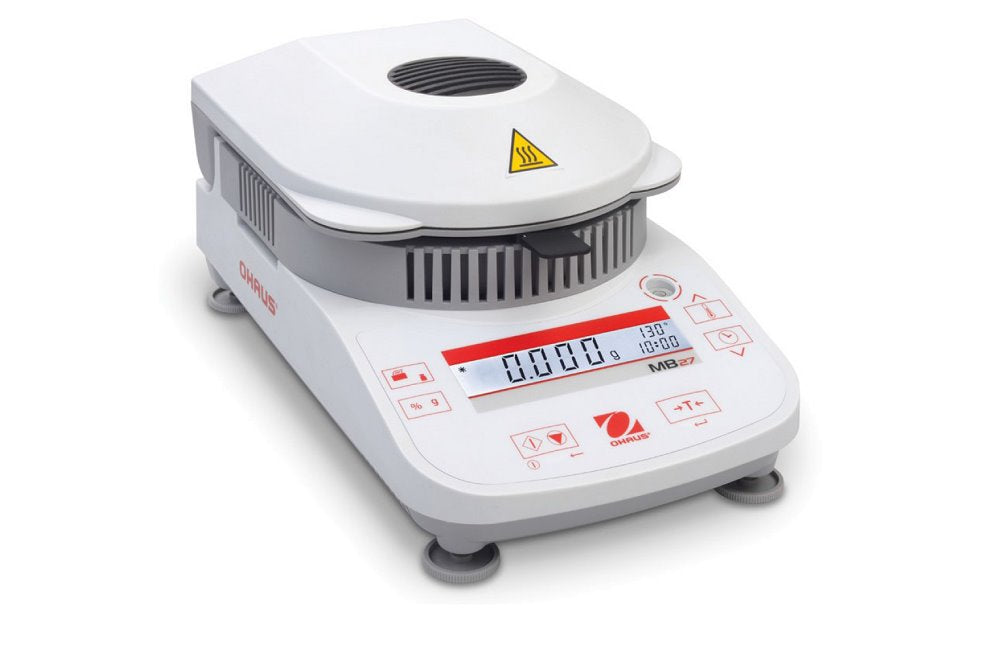

Choosing between a semi-micro balance and a standard 0.1 mg analytical balance is not simply a matter of buying the instrument with the smallest displayed increment. The right choice depends on the amount of material you routinely weigh, the uncertainty your process can tolerate, the minimum sample weight required by your method, environmental conditions, throughput, calibration strategy, and the level of documentation your laboratory needs.
A typical analytical balance with 0.1 mg readability is suitable for a wide range of routine laboratory weighing tasks. A semi-micro balance, often offering 0.01 mg readability and sometimes finer resolution over part of its weighing range, is intended for applications where smaller mass changes must be resolved reliably. That additional sensitivity can be valuable, but it also makes environmental control, handling technique, installation, and maintenance increasingly important.
Understanding these differences can help laboratories avoid two costly mistakes: purchasing more sensitivity than the workflow actually requires or choosing a balance that cannot reliably support the laboratory's smallest samples and required measurement uncertainty.
Quick Answer: 0.01 mg Versus 0.1 mg Lab Balance Choice
A 0.1 mg analytical balance is generally the practical choice when routine samples are large enough that 0.1 mg readability, combined with the instrument's repeatability and uncertainty performance, comfortably meets the method's requirements. These balances are commonly used for reagent preparation, formulation, quality control, sample preparation, general research, and many quantitative laboratory procedures, including general weighing when samples are not only a few grams or less.
A semi-micro balance becomes worth considering when your laboratory routinely handles much smaller sample quantities, needs to distinguish mass changes below 0.1 mg, or must achieve a lower validated minimum weight than a conventional analytical balance can provide. Applications involving very small reference materials, potent or expensive compounds, filter weighing, residue determination, micro-level formulation, or demanding gravimetric work may justify the additional sensitivity, especially for trace analysis or trace level analysis when lower uncertainty at very small mass is required.
Readability alone, however, should never make the decision, because the right balance and the right lab balance are chosen from the full performance picture, not just the extra decimal place. A display showing 0.01 mg does not automatically mean every 0.01 mg change represents equally reliable measurement performance. Repeatability, minimum weight, linearity, uncertainty, environmental stability, and the manufacturer's specifications all need to be considered together.
Use Cases: Laboratory Balances And High Precision Tasks
Laboratory balances are used to measure mass across routine work and high precision measurements, so the required level of precision can vary considerably. A standard analytical balance may be appropriate for preparing solutions, weighing reagents, performing routine quality-control measurements, conducting chemical analysis, and preparing samples when the target quantities remain comfortably above the balance's validated minimum weight.
Sartorius MCA225S-3S00-D QP3 MDS Cubis II Semi Micro Balance models are more relevant when reducing sample size has a meaningful scientific or financial benefit. A laboratory working with scarce reference standards, expensive pharmaceutical compounds, small quantities of active ingredients, tiny research samples, or low-mass filters may benefit from being able to measure smaller quantities with suitable uncertainty, especially in pharmaceutical research and environmental testing where smaller samples may matter. Choosing the right laboratory balance depends on the application rather than assuming more sensitivity is always better.

High precision can also matter when a method depends on detecting a very small difference between two measurements. Examples can include before-and-after filter measurements, residue analysis, loss-on-drying related workflows, material research, and other gravimetric procedures. The correct instrument still depends on the actual method requirements rather than the application name alone.
The key question is therefore not simply, “Do we need more decimal places?” Instead, ask, “What is the smallest net sample we must weigh, and what uncertainty is acceptable at that sample size?” That question provides a much stronger basis for choosing between analytical and semi-micro laboratory balances.
Specs Comparison For Analytical Balances And Semi-Micro Models
A useful comparison starts with readability, repeatability, minimum weight, balance capacity, maximum capacity, linearity, stabilization behavior, calibration system, draft protection, and available environmental-control features.
A conventional analytical balance commonly provides readability of 0.1 mg, or 0.0001 g. Semi-micro balances commonly extend displayed resolution to 0.01 mg, or 0.00001 g, although specifications vary by model and some instruments use different weighing ranges or resolution levels. Analytical balances typically have capacities from 22 g to 520 g, while semi-micro balances typically have capacities from 50 g to 220 g.
The extra digit can be important, but buyers should examine the complete specification sheet. Repeatability indicates how consistently the balance performs when the same load is measured repeatedly under defined conditions. Linearity relates to performance across the weighing range. Stabilization time affects productivity, while minimum-weight information can help determine whether an instrument is suitable for the smallest samples used in a particular procedure, and analytical balances commonly use electromagnetic force compensation to convert load into a digital reading for precise measurement.
Readability And Minimum Weight Details
Readability is the smallest increment displayed by a balance. A 0.1 mg analytical balance displays mass in increments of 0.0001 g, while a 0.01 mg semi-micro balance can display increments of 0.00001 g. This tenfold difference in displayed resolution can be important for very small samples, but fine readability alone does not determine whether a tiny sample can be weighed reliably.
Minimum weight is a different concept and is often more important for selecting an instrument. It represents the lower end of the weighing range at which a required relative measurement uncertainty can be achieved under specified conditions. The exact minimum weight depends on factors including repeatability, the laboratory's required tolerance, environmental conditions, operating procedures, and applicable quality requirements.
This means you should not assume that a balance's minimum acceptable sample weight is equal to its readability. A 0.01 mg display does not mean that weighing a 0.01 mg sample is appropriate, and laboratories still need enough sample mass for reliable results even when weighing a few grams is not the issue. Laboratories should establish minimum weight using the relevant method, quality system, manufacturer guidance, and actual performance at the installation location.
If your routine samples are comfortably above the minimum weight achievable with a 0.1 mg analytical balance, moving to a semi-micro model may offer little practical advantage. If the method does not push minimum weight limits, a precision balance or semi analytical balance may be more appropriate. If samples approach or fall below that acceptable range, the semi-micro option becomes much more relevant.
Capacity And High Capacity Tradeoffs
Greater sensitivity can sometimes come with capacity or operating-range considerations. Laboratories therefore need to consider both the smallest sample they must measure and the total load that will be placed on the pan, including containers, vessels, weighing paper, filters, or other accessories, and confirm the maximum load covers the heaviest container-plus-sample combination used in practice.
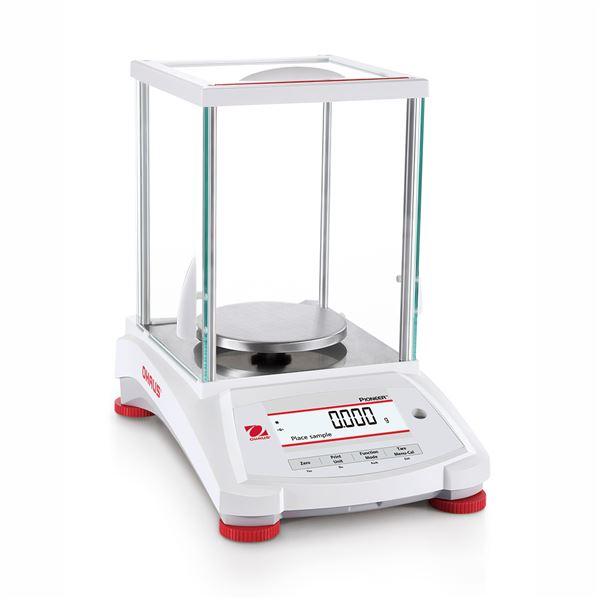
Ohaus PX224/E Pioneer Analytical Balance, 220 g x 0.1 mg may be more useful than a semi-micro model when relatively heavy containers are common and ultra-small net sample measurements are not required. In many routine workflows, analytical or precision models are also the better fit for larger samples when very fine net measurements are unnecessary. Conversely, a semi-micro balance may be more appropriate when the net sample is very small and measurement performance at the low end is critical.

Some advanced balances use dual-range or multi-range designs that provide different readability at different portions of their weighing range. These models can provide additional flexibility, but users should understand exactly when readability changes and whether their typical tare-plus-sample combination remains within the desired range.
Selecting capacity simply by choosing the largest available number can also be counterproductive. The objective is to match capacity to workflow rather than buying significantly higher capacity than the application needs.
Calibration: External Calibration Versus Internal Calibration
Calibration strategy becomes increasingly important as measurement sensitivity increases. External calibration requires the user to apply suitable certified weights according to the laboratory's procedures. This approach can be effective, but it depends on having appropriate weights, correct handling practices, suitable environmental conditions, and a consistent calibration schedule.
Internal calibration uses a built-in reference weight to perform an adjustment or calibration-related routine without requiring the operator to manually place an external weight on the pan. Depending on the model, internal adjustment may be initiated manually or automatically in response to predefined conditions such as temperature changes or elapsed time.
For laboratories performing frequent high-precision weighing, internal calibration can simplify routine operation and support regular calibration to maintain accuracy. It does not eliminate the need for independent verification, routine performance checks, or appropriate certified reference weights when these are required by the laboratory's quality system.
When comparing analytical and semi-micro balances, consider not only whether internal calibration is available but also how the feature works, what records it generates, whether automatic adjustment can be controlled according to your procedures, and how it fits into your validation and documentation requirements.
Environment And Setup For High Precision Lab Balance Performance
The more sensitive the balance, the more important its environment becomes. Air movement, vibration, temperature changes, direct sunlight, the need for a stable bench, static electricity, nearby doors, HVAC vents, and even operator technique can affect high-precision weighing. Controlled placement matters because these disturbances can significantly impact weighing accuracy.
A 0.1 mg analytical balance already requires careful placement and draft protection. A 0.01 mg semi-micro balance generally demands even greater attention to environmental stability. These balances are extremely sensitive and need suitable setup for optimal performance. Installing a highly sensitive instrument in an unsuitable location can prevent the laboratory from realizing the performance it paid for.
The balance should be installed on a stable surface away from heavy foot traffic, frequently opened doors, vibrating equipment, direct air currents, and rapid temperature fluctuations. Samples, containers, and calibration weights should also be allowed to reach appropriate environmental equilibrium when necessary. Handling practices should minimize direct contact that can transfer heat or contamination.
Draft shields are particularly important at analytical and semi-micro levels because even small air currents can disturb a measurement. Buyers should compare draft-shield design, the weighing chamber, door operation, access, cleaning convenience, and any automatic features available on higher-end models, since these features influence sample stability and handling.
Anti Vibration Table And Vibration Control
Vibration is one of the environmental factors that can make high-resolution weighing difficult. Nearby centrifuges, refrigerators, pumps, foot traffic, elevators, construction, or other equipment can transmit movement through floors and benches.
An anti vibration table or dedicated weighing table can help isolate the balance from some of these disturbances. The need for one depends on the building, installation location, balance sensitivity, and surrounding equipment.
For semi-micro work, evaluating vibration before installation is particularly worthwhile. Purchasing a 0.01 mg instrument without providing a stable platform can result in unstable readings, longer stabilization times, and reduced productivity. In challenging environments, investing in the weighing station itself can be just as important as selecting the balance.
Static Control And Accurate Readings
Static electricity can create significant problems when weighing small quantities, especially when samples or containers are made from materials that readily accumulate charge. Plastic vessels, powders, filters, gloves, low-humidity conditions, and repeated handling can all contribute.
At semi-micro resolution, electrostatic forces that might be less noticeable during lower-resolution weighing can become much more significant. Symptoms can include drifting readings, poor repeatability, unusually long stabilization, or measurements that change when an operator moves near the balance.
Where static is a recurring problem, laboratories may need appropriate ionization or static-control equipment, suitable sample containers, humidity management, and improved handling procedures. Some premium laboratory balances can be configured with integrated or accessory ionizers designed to reduce electrostatic effects before weighing.
Static control should therefore be considered during the purchasing stage rather than only after unexplained measurement problems appear.

Features To Compare When Buying A Lab Balance
Readability should be only one line on your comparison sheet. Buyers should also compare repeatability, linearity, capacity, minimum-weight capability, stabilization time, calibration options, draft-shield design, leveling systems, static-control options, and environmental monitoring features. If your work is less delicate and needs more capacity, loading balances such as top loading balances may be a better fit than either an analytical or semi-micro model.
Usability also matters. A clear interface, intuitive operating procedures, programmable applications, user profiles, automatic doors, status indicators, and guided workflows may improve consistency when multiple technicians use the same instrument.
Connectivity deserves attention as well. Depending on the laboratory, USB, RS-232, Ethernet, or other data-transfer capabilities can help move weighing results into printers, computers, laboratory information systems, or other documentation workflows. Before purchasing, verify compatibility with the systems you actually use.
For regulated or highly documented environments, especially regulated environments, consider user management, audit trails, data-integrity functions, method control, electronic records, and relevant compliance features. Not every laboratory needs every advanced option, so the best balance is the one whose functionality matches the real workflow rather than the one with the longest feature list.
Workflow Fit: Throughput, Sample Handling, And Lab Balance Integration
Higher sensitivity does not automatically produce a faster or more efficient laboratory. Semi-micro weighing can require more careful sample handling, greater environmental control, longer equilibration, and stricter operating practices. These requirements should be considered alongside the benefit of lower sample quantities, and they are usually a poor fit for work closer to production floors or other rougher settings where portability and speed matter more than extreme sensitivity.
A laboratory processing a high number of routine samples may find a reliable 0.1 mg analytical balance more efficient when its measurement capability already meets the method requirements. A laboratory processing fewer but extremely small or valuable samples may gain more from semi-micro performance, while portable balances are often better suited to mobile or non-laboratory workflows.
Consider how operators load samples, whether containers fit comfortably inside the draft shield, how frequently tare vessels are changed, how quickly readings stabilize, and whether automatic doors or hands-free operation would improve throughput. Container fit matters especially in modern laboratories that use varied vessels and accessories.
Integration is equally important. If weighing results must be transferred into another system, investigate how easily the balance can communicate with your existing equipment and software. Reducing manual transcription can improve workflow efficiency and help limit avoidable data-entry errors.
Validation, Maintenance, And Service For Laboratory Balances
A laboratory balance should continue to meet its required performance after installation. This requires an appropriate program of routine checks, cleaning, calibration or adjustment, performance verification, and preventive maintenance to maintain accuracy and help users weigh accurately over time.
The frequency and extent of these activities depend on instrument use, risk, quality requirements, manufacturer recommendations, and laboratory procedures. High-precision applications may justify more frequent monitoring because small changes in instrument performance or environmental conditions can have a greater effect on accurate results.
For regulated laboratories and controlled labs, documentation may be particularly important. Calibration certificates, service records, qualification documentation, standard operating procedures, and performance records can become part of the instrument's lifecycle management.
Cost And Total Cost Of Ownership Considerations
Semi-micro balances generally represent a greater investment than routine 0.1 mg analytical balances, but purchase price is only one component of cost. The laboratory may also need an anti vibration table, static-control equipment, environmental improvements, suitable calibration weights, service agreements, qualification, accessories, software, or operator training.
At the same time, higher sensitivity can provide economic value when it allows a laboratory to reduce the amount of an expensive material required for a valid measurement. Using smaller quantities of costly standards, pharmaceutical compounds, or scarce research samples can make the investment worthwhile in the right application.
The opposite is also true. Paying for 0.01 mg readability when every method comfortably operates within the capabilities of a 0.1 mg analytical balance may add cost and operational complexity without producing a meaningful benefit.
Total cost of ownership should therefore include purchase price, accessories, installation requirements, calibration, maintenance, downtime, consumables, training, and the expected useful life of the instrument. Evaluate these costs against the measurable benefit the additional performance provides.
Decision Checklist: When To Choose A Semi-Micro Over A 0.1 mg Analytical Balance
Choose a semi-micro balance when your smallest required samples cannot be weighed with acceptable uncertainty on the 0.1 mg analytical balance, your method requires measurement of mass changes below the practical capability of a standard analytical model, or reducing sample quantities provides a significant scientific or financial advantage.
Ohaus EXP125D/AD Explorer Plus Semi Microbalance may also make sense when you regularly work with expensive or scarce materials, demanding gravimetric procedures, low-mass filters, small reference standards, or other applications where reliable performance at very low sample weights is critical.
Stay with a 0.1 mg analytical balance when its repeatability, minimum weight, capacity, and measurement uncertainty already satisfy your methods. For many routine laboratory procedures, the analytical balance provides an effective combination of precision, capacity, ease of use, speed, and cost, while some workflows are better served by a precision balance rather than a more sensitive instrument.
Before making the final decision, document your smallest sample weight, maximum load and tare-plus-sample load, required uncertainty, typical daily throughput, calibration requirements, environmental conditions, connectivity needs, compliance requirements, and available budget. Then compare those requirements directly against manufacturer specifications.

Conclusion And Recommended Next Steps For Lab Balance Selection
The difference between a 0.1 mg analytical balance and a 0.01 mg semi-micro balance goes far beyond one extra decimal place. The decision should be driven by minimum sample weight, acceptable uncertainty, repeatability, capacity, environmental conditions, calibration requirements, workflow, and total cost of ownership.
For routine laboratory weighing where samples remain comfortably within the validated operating range of an analytical balance, a 0.1 mg model can provide the precision and efficiency required without unnecessary complexity. When your laboratory must reliably weigh much smaller quantities or detect smaller mass changes, a semi-micro balance may provide the performance your method demands.
Before purchasing, define your actual weighing requirements and compare them with model-specific specifications rather than relying on readability alone. Pay particular attention to repeatability and minimum weight, then evaluate capacity, calibration, draft protection, static control, vibration management, data connectivity, and service support.
The goal is not simply to purchase the balance with the highest resolution. It is to select a laboratory balance that delivers reliable measurement performance for your real samples, in your real laboratory environment, while supporting the accuracy, efficiency, and documentation your workflow requires.
Frequently Asked Questions
What is the difference between a micro balance and an analytical balance?
A microbalance is designed for much smaller samples and typically provides finer readability than a standard analytical balance. Analytical balances commonly offer 0.1 mg readability, while microbalances can measure at the microgram level or finer. The appropriate choice depends on sample size, required uncertainty, and application.
What is a semi-micro balance?
A semi-micro balance is a high-precision laboratory balance and one of the high precision balances used when standard analytical balances do not provide enough sensitivity for very small samples; it typically provides readability down to 0.01 mg (0.00001 g). It is useful when samples or mass changes are too small for a standard 0.1 mg analytical balance to measure with the required performance.
What is the smallest amount an analytical balance can detect?
Many standard analytical balances have a readability of 0.1 mg (0.0001 g), meaning this is the smallest displayed increment. However, readability is not the same as minimum weight. The smallest sample that can be weighed reliably depends on repeatability, required measurement uncertainty, environmental conditions, and the specific balance.