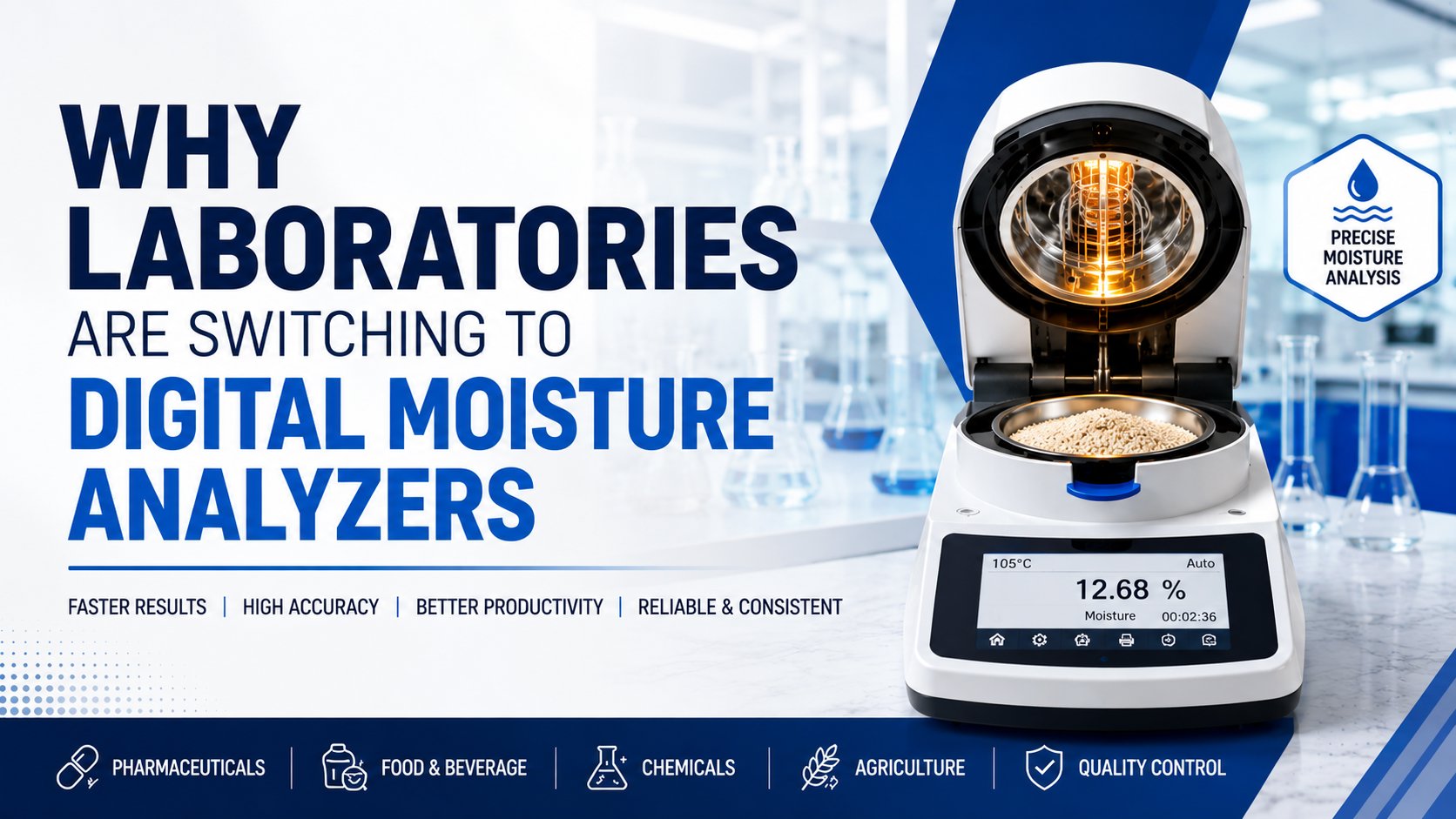
Moisture Analyzers: Overview
Modern laboratories are rapidly moving toward digital moisture analyzers because they provide faster, more accurate, and more repeatable moisture testing compared to traditional drying methods. Laboratories that rely on precise measurements often choose advanced digital moisture analyzers to improve efficiency, reduce testing time, and maintain consistent product quality. Among the key advantages of digital moisture analyzers are their speed and ease of use, making them ideal for routine testing in busy laboratory environments. Moisture content plays a critical role in product quality, consistency, shelf life, and regulatory compliance across many industries including pharmaceuticals, food processing, chemicals, agriculture, plastics, and environmental testing. Digital moisture analyzers combine advanced heating technology with precision weighing systems to deliver accurate results and reliable moisture level measurements in samples within minutes. As laboratories continue to improve efficiency and reduce human error, digital moisture analyzers have become an essential part of modern quality control and research operations by automatically analyzing samples and minimizing manual intervention. Additionally, modern digital moisture analyzers support digital data logging and easy integration into laboratory information management systems (LIMS), improving traceability and compliance with regulatory standards.
How Moisture Analysis Works
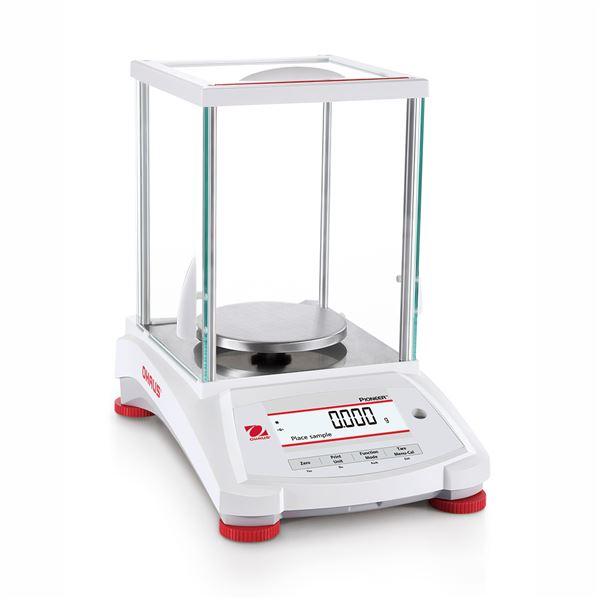
Moisture analysis is used to measure the moisture content of the sample by quantifying the amount of water or volatile substances present. The process involves several key components, including the weighing pan, heating element, and integrated software, which work together to ensure accurate and consistent results. The analysis begins by placing a sample onto the analyzer’s weighing pan. The instrument records the initial sample weight before applying heat to evaporate moisture. As the sample dries, the analyzer continuously measures weight loss, determining the change in the content of the sample, until the drying process is complete. The final moisture percentage is automatically calculated and displayed on the screen. Many laboratories prefer using analytical balances alongside moisture analyzers because accurate weight measurement is essential for achieving precise and repeatable results. Digital moisture analyzers eliminate many manual calculations and provide highly consistent results that help laboratories improve productivity and testing reliability.
Thermogravimetric Method
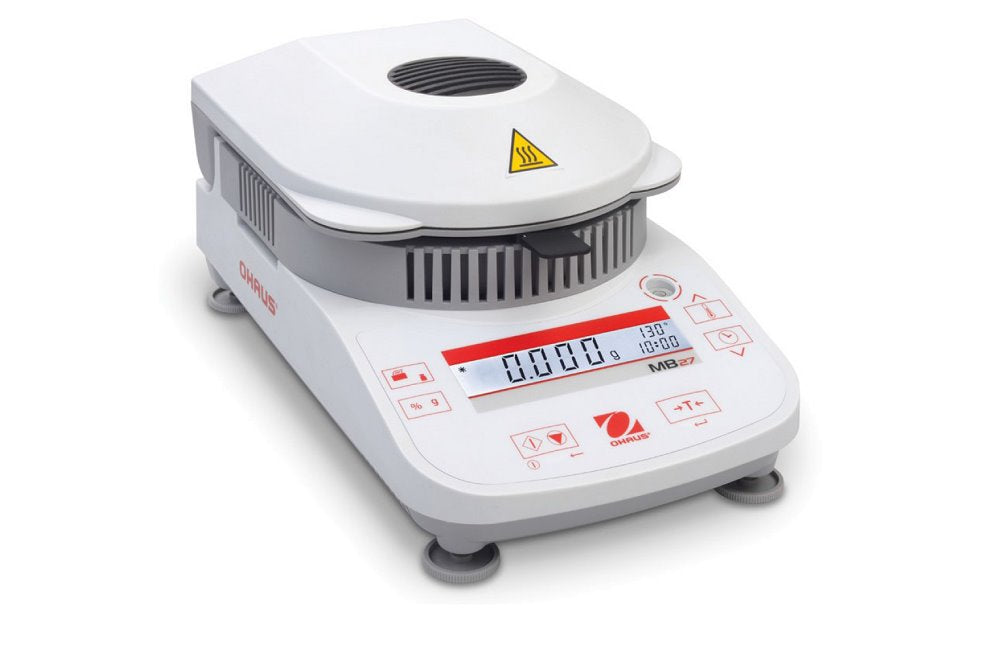
The working principles of digital moisture analyzers are based on the thermogravimetric method, which is the most common technique used in these instruments. In this method, a halogen moisture analyzer uses a halogen lamp to rapidly heat the sample while a precision balance continuously measures weight loss due to moisture evaporation. The analyzer precisely tracks weight change throughout the drying cycle and calculates the percentage of moisture lost. This process provides reliable results for laboratories that require accurate moisture testing for product development, quality assurance, and production control. High-performance Ohaus MB23 Moisture Analyzer models are commonly used in laboratories because they provide fast heating response, simple operation, and reliable moisture determination for routine testing applications. The thermogravimetric method is widely accepted because it delivers repeatable measurements while significantly reducing testing time compared to traditional oven drying methods.

Halogen Lamp Heating
Many modern digital moisture analyzers use halogen heating technology, where the sample is heated by a halogen lamp to ensure rapid and uniform moisture removal across the sample surface. Halogen lamps reach operating temperatures quickly, allowing laboratories to create and customize drying methods using user-friendly features, such as step-by-step guides or automated algorithms tailored to specific sample types. Halogen moisture analyzers can deliver accurate moisture content results in as little as 2 to 10 minutes, significantly faster than traditional oven drying methods that can take 1 to 24 hours. Fast heat response improves testing efficiency while maintaining accurate moisture determination. Many quality control departments use Ohaus moisture analyzers because they offer excellent speed-to-accuracy performance while reducing manual testing procedures. Halogen moisture analyzers are especially useful in busy laboratories where speed and consistency are essential for maintaining production schedules and meeting quality standards.
Moisture Content Calculation
Digital moisture analyzers automatically calculate moisture content using advanced internal software. The analyzer compares the sample’s initial weight with its final dry weight after heating. This calculation determines the water content of the sample, which is a key parameter in moisture analysis. Moisture percentage is typically calculated using the formula:
Moisture Content (%)=Initial Weight−Final WeightInitial Weight×100\text{Moisture Content (%)} = \frac{\text{Initial Weight} - \text{Final Weight}}{\text{Initial Weight}} \times 100Moisture Content (%)=Initial WeightInitial Weight−Final Weight×100
Automatic calculations reduce operator errors and provide laboratories with fast, reliable data. Many digital moisture analyzers also store testing methods, generate reports, and support data transfer for improved laboratory documentation and traceability. Halogen moisture analyzers, in particular, offer a superior speed-to-accuracy ratio compared to conventional methods, making them ideal for high-throughput quality control environments.
Precision Moisture Analysis
Precision moisture analysis is critical for laboratories that require highly accurate and repeatable measurements of various materials, including grains, powders, and organic substances. Even small moisture variations can affect product quality, chemical stability, manufacturing consistency, and regulatory compliance. Digital moisture analyzers use high-performance weighing sensors and controlled heating systems to achieve precise moisture determination. Laboratories working with pharmaceutical powders, chemicals, and food ingredients often depend on Ohaus MB90 Moisture Analyzer systems for high-precision moisture determination and advanced method development capabilities. Advanced models include features such as programmable drying profiles, automatic shutoff criteria, temperature calibration, and real-time moisture tracking to improve analytical performance. Automated systems in digital moisture analyzers require minimal training and reduce the risk of human error inherent in traditional methods.

Method Development For Moisture Analysis
Proper method development is essential for achieving accurate moisture analysis results. Laboratories must determine the correct drying temperature, sample size, heating duration, and endpoint criteria for each material being tested. Different products respond differently to heat, so laboratories often develop customized testing methods to ensure accurate moisture determination without damaging the sample. Digital moisture analyzers simplify method development by allowing users to save and repeat optimized testing procedures for consistent results across multiple batches and operators.
Benefits Driving The Switch
Laboratories are switching to digital moisture analyzers for several important reasons. One major advantage is faster testing speed, which allows laboratories to improve workflow efficiency and reduce production delays. Digital analyzers also improve accuracy and repeatability by minimizing operator involvement and automating calculations. Many laboratories appreciate the reduced labor requirements and simplified operation. Built-in data storage, USB connectivity, and reporting functions help laboratories maintain documentation and regulatory compliance. Digital moisture analyzers also reduce long testing cycles associated with conventional drying ovens, making them highly valuable in fast-paced laboratory environments.
Applications And Industries
Digital moisture analyzers are used across a wide range of industries and laboratory applications. Food laboratories use them to monitor moisture levels in ingredients, snacks, dairy products, meat products, grains, and baked goods, which is crucial for food production and maintaining the quality and safety of food products. Accurate moisture analysis in food products helps ensure proper shelf life, texture, and regulatory compliance. Pharmaceutical laboratories rely on moisture analysis for powder testing, tablet production, and raw material validation, as too much moisture can compromise drug stability and product integrity. Chemical manufacturers use moisture analyzers to ensure product consistency and stability, since too much moisture can lead to processing failures. Agricultural laboratories test materials such as crops, seeds, and soil samples for moisture control. Plastics and polymer manufacturers also use moisture analyzers to prevent defects caused by excess moisture during production processes.

Choosing A Moisture Analyzer
Selecting the right moisture analyzer depends on several important factors including sample type, testing volume, required accuracy, and laboratory workflow requirements. Laboratories should evaluate readability, heating technology, temperature range, drying programs, calibration capabilities, and data management features when selecting an instrument. Halogen moisture analyzers are often preferred for rapid testing, while advanced models with customizable drying profiles provide greater flexibility for complex applications. Laboratories should also consider long-term service support, calibration services, and compliance requirements when investing in moisture analysis equipment.
Features to Look for in a Moisture Analyzer
When choosing a moisture analyzer for laboratory or industrial applications, several essential features should be considered to ensure accurate and reliable moisture content determination. A wide temperature range is critical, as different sample types require specific drying temperatures for optimal results. Precision in weight measurement is equally important, as even minor weight changes can significantly impact the accuracy of moisture analysis. Advanced drying methods, such as infrared radiation or halogen lamp heating, provide rapid and uniform heating, which is vital for repeatable results and efficient analysis.
A user-friendly interface is another key feature, allowing for straightforward method development and easy navigation during testing. The ability to store multiple drying profiles and methods streamlines workflow and supports consistent, repeatable results across various sample types. Compliance with industry standards is also essential, ensuring that the analyzer meets regulatory requirements for quality assurance and data integrity.
Additional features to look for include automatic shut-off to prevent over-drying, data export options for seamless integration with laboratory information systems, and a robust, durable design suitable for demanding industrial environments. By prioritizing these features—temperature range, precise measurement, advanced drying technology, method development capabilities, and compliance—laboratories can select a moisture analyzer that delivers accurate, efficient, and reliable moisture content analysis for a wide range of applications.
Calibration And Validation
Calibration and validation are essential for maintaining moisture analyzer accuracy and ensuring reliable results. Regular balance calibration verifies weighing performance, while temperature calibration confirms proper heating accuracy. Laboratories should follow manufacturer recommendations and maintain documented calibration schedules to support quality assurance programs. Validation procedures help confirm that testing methods produce accurate and repeatable moisture measurements for specific sample types. Proper calibration and validation practices improve confidence in laboratory results and help maintain compliance with industry standards and regulatory requirements.
Troubleshooting Common Issues
Despite the advanced technology in modern moisture analyzers, users may occasionally encounter issues such as inaccurate results, excessive weight loss, or inconsistent drying times. To address these challenges, it is essential to start by verifying the instrument’s calibration, as both the weighing system and heating element must be properly calibrated for accurate moisture analysis. Ensuring correct sample preparation—such as using the appropriate sample size and evenly spreading the material—can also help prevent errors in moisture content determination.

Selecting the correct drying method and temperature is critical, as too high a drying temperature may cause the sample to evaporate too quickly, leading to inaccurate weight loss measurements. Conversely, too low a temperature may result in incomplete drying and excess moisture remaining in the sample. Environmental factors, such as ambient humidity and temperature, should be controlled to minimize their impact on the drying process and final results.
Regular inspection and maintenance of the halogen lamp or other heating elements are essential to maintain consistent performance. If the analyzer produces inconsistent results or the sample evaporates unevenly, adjusting the drying method or temperature may be necessary. Method development tailored to specific sample types can further enhance accuracy and repeatability.
By understanding the basic principle of moisture analysis and following these troubleshooting steps—calibration, proper sample handling, method optimization, and routine maintenance—laboratories can ensure their moisture analyzers deliver critical, accurate, and reliable results for quality control and research applications.
Implementation Checklist For Labs Switching
Laboratories planning to switch to digital moisture analyzers should begin by identifying their testing requirements and sample types. Selecting the correct analyzer model based on accuracy, heating technology, and throughput needs is essential for long-term success. Laboratories should develop standardized testing methods, train personnel on proper operation, and establish routine calibration schedules. Integrating data management and reporting procedures can further improve laboratory efficiency. Before full implementation, laboratories should validate testing methods and compare results against existing reference methods to ensure reliable performance.
Conclusion And Next Steps
Digital moisture analyzers are transforming modern laboratory operations by delivering faster, more accurate, and more efficient moisture testing. As laboratories continue to prioritize automation, precision, and productivity, digital moisture analyzers have become a preferred solution across multiple industries. Their ability to provide rapid results, reduce operator error, and support regulatory compliance makes them an essential investment for quality-focused laboratories. Laboratories considering an upgrade should evaluate their testing requirements carefully and choose a moisture analyzer that supports both current and future operational needs.
Frequently Asked Questions
Are digital moisture meters better?
Digital moisture meters are generally better for fast, easy, and more consistent moisture testing compared to many traditional manual methods. They provide quick readings, reduce operator error, and often include digital displays, automatic calculations, and data storage features. Modern digital moisture analyzers also offer improved accuracy and repeatability, making them ideal for laboratories, manufacturing facilities, food production, pharmaceuticals, and quality control applications.
What is the advantage of using a moisture analyzer over the oven drying method?
A moisture analyzer provides significantly faster results than the traditional oven drying method while maintaining high accuracy. Traditional oven drying can take several hours, whereas a digital moisture analyzer can often complete testing within minutes. Moisture analyzers also automate weighing, heating, and moisture calculations, reducing labor and minimizing human error. This helps laboratories improve efficiency, consistency, and overall productivity.
What is the difference between a dew point analyzer and a moisture analyzer?
A dew point analyzer measures the amount of moisture present in gases or compressed air systems by determining the temperature at which condensation occurs. It is commonly used in industrial gas monitoring and environmental control applications. A moisture analyzer, on the other hand, measures moisture content in solid, liquid, or powder samples by heating the material and calculating weight loss during drying. Moisture analyzers are widely used in laboratories, food processing, pharmaceuticals, agriculture, and manufacturing quality control.
What is the difference between a moisture meter and a moisture analyzer?
A moisture meter is typically a handheld device designed for quick surface or internal moisture readings in materials such as wood, concrete, soil, or drywall. It provides fast estimates but may not offer laboratory-level precision. A moisture analyzer is a more advanced laboratory instrument that uses precision weighing and controlled heating technology to determine exact moisture content through thermogravimetric analysis. Moisture analyzers deliver higher accuracy, repeatability, and detailed moisture analysis for scientific and industrial applications.