Overview: Why Businesses Compare Laboratory Balances
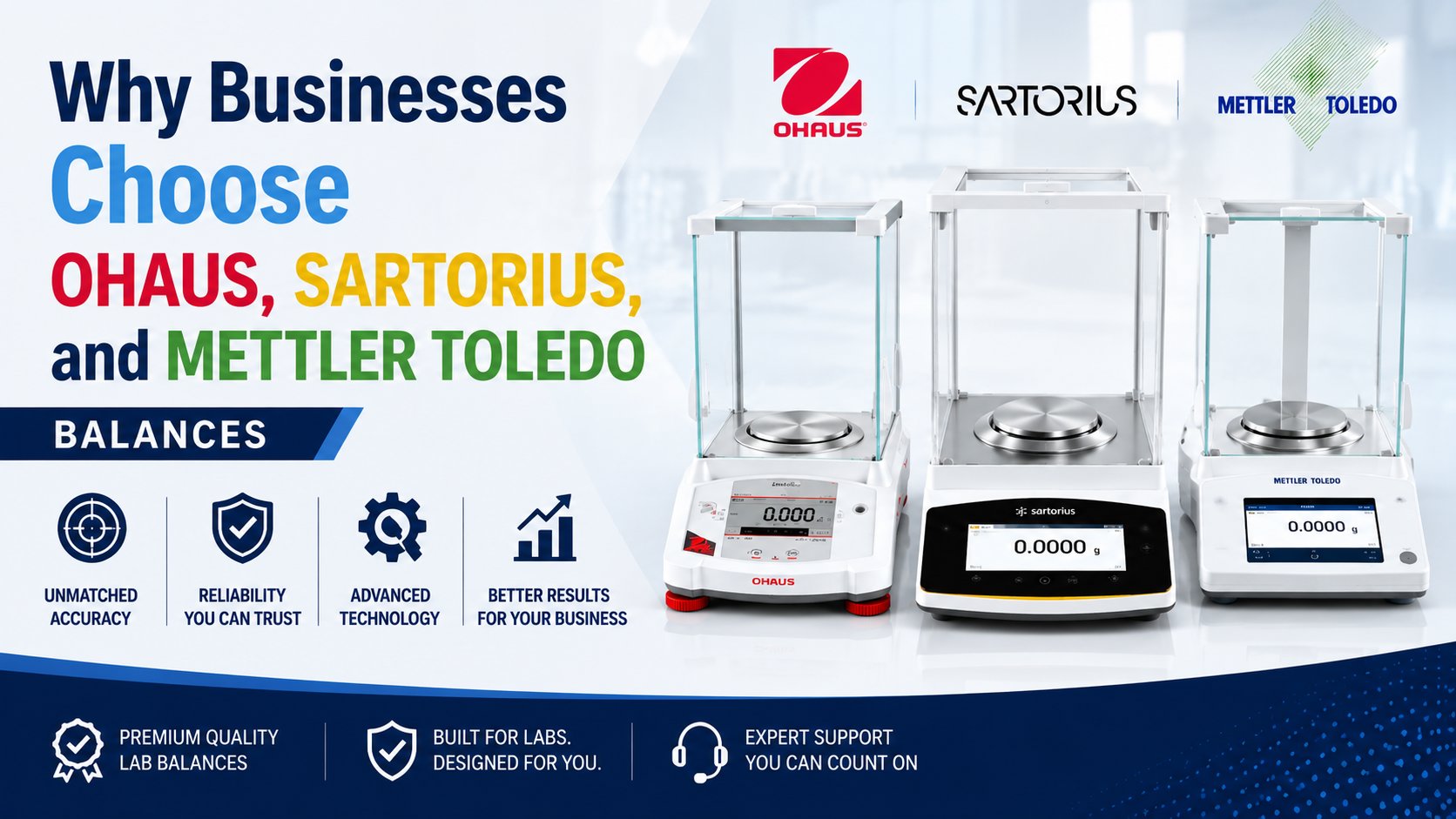
Laboratories, research facilities, pharmaceutical companies, universities, and industrial manufacturers all depend on accurate weighing equipment for daily operations. Choosing the right laboratory balance is critical because even the smallest weighing error can affect product quality, research accuracy, compliance, and operational efficiency. This is why many businesses compare leading brands such as Ohaus, Sartorius, and Mettler Toledo before making purchasing decisions.
These three manufacturers are among the most recognized names in laboratory weighing equipment because they offer analytical balances, precision balances, moisture analyzers, and industrial weighing systems designed for different industries and budgets. While all three brands provide reliable performance, each company focuses on different strengths including affordability, advanced technology, precision, compliance features, and long-term laboratory support.
Businesses often compare these brands to determine which balance provides the best value, reliability, and functionality for their specific laboratory applications. Laboratories searching for professional analytical balances and precision weighing equipment often explore analytical balance collections
Mettler Toledo: Precision Balances And Advanced Technology
Mettler Toledo is widely known for manufacturing high-end laboratory balances with advanced weighing technology and exceptional precision. Many pharmaceutical laboratories, research institutions, and regulated industries choose Mettler Toledo because of the company’s strong reputation for innovation, automation, and data integrity solutions, and it is often treated as a global gold standard for highly regulated industries and enterprise-level operations.
Mettler Toledo balances often include highly advanced touchscreen interfaces, automatic internal calibration systems, environmental compensation features, and sophisticated data management capabilities. Signature MonoBloc load cells and SmartPan weighing pans also help deliver faster stabilization and results that can be up to twice as fast as standard balances. These features help laboratories improve workflow efficiency while maintaining highly accurate weighing performance.
Many businesses also appreciate the company’s focus on regulatory compliance. Their laboratory balances are commonly used in heavily regulated settings such as global pharmaceutical manufacturing, clinical trial labs, quality control labs, and other environments where strict documentation and audit trails are required. The integration of advanced software systems gives Mettler Toledo balances complete data traceability and supports compliance with glp gmp and FDA 21 CFR Part 11, making them especially attractive for businesses handling FDA-regulated processes and GMP laboratory environments. Businesses looking for premium Mettler Toledo analytical balances and laboratory weighing systems often browse. One popular laboratory weighing model is Mettler Toledo MR204/A Analytical Balance
Although Mettler Toledo balances are often more expensive than competing brands, many businesses consider the investment worthwhile because of the reliability, long-term performance, and advanced functionality offered by the equipment.

Sartorius Balances: High-End Analytical Balance Solutions
Sartorius is another premium laboratory balance manufacturer highly respected within scientific and pharmaceutical industries. Sartorius is especially known for analytical balances and ultra-micro balances, and it leads the industry in specialized ultra-micro and microbalance technology with readability down to fractions of a microgram.
Many laboratories choose Sartorius balances because of their exceptional weighing stability, fast stabilization times, and user-friendly designs. The company focuses heavily on analytical laboratory applications where precise measurements are essential for research accuracy and product consistency.
Sartorius balances are commonly found in biotechnology labs, biopharmaceutical companies, pharmaceutical facilities, universities, quality control operations, and high-end research facilities. Their Cubis and Secura series balances are especially popular because they combine advanced weighing performance with intelligent compliance monitoring systems, and the Cubis II fully supports 21 CFR Part 11 and EU Annex 11 with electronic signatures, complete audit trails, and on-device user management.
These balances are often chosen where a microscopic measurement error could derail millions of dollars in product development or compromise sensitive quality control work.
One of the strongest advantages of Sartorius balances is their emphasis on user guidance and contamination reduction. Many models include advanced draft shield designs, highly sensitive weighing cells, and sophisticated software features that support GLP/GMP workflows while helping minimize weighing errors caused by airflow, static electricity, temperature fluctuations, and operator handling mistakes. For businesses needing high-end Sartorius analytical balances and ultra-precision laboratory weighing equipment. A highly searched Sartorius laboratory balance model is Sartorius MCE224S-2S00-I Cubis II Analytical Balance
Businesses that require premium analytical weighing performance often choose Sartorius because of the brand’s strong reputation for precision engineering and laboratory-focused innovation.

Ohaus: Value-Oriented Lab Balances
Ohaus has built a strong reputation for producing reliable and affordable laboratory balances that serve a wide range of industries and educational institutions. Many businesses choose Ohaus balances because they deliver dependable, professional-grade precision at an accessible price point, making it more affordable to deploy multiple units across facilities for budget conscious labs.
Ohaus offers analytical balances, precision balances, moisture analyzers, bench scales, and industrial scales suitable for laboratories, schools, production facilities, and research applications. Their products are especially popular in multi-user industrial spaces, academic labs, food production lines, and for routine quality control tasks, especially where teams need dependable weighing equipment without extremely high costs in multi user labs.
One of the biggest advantages of Ohaus balances is ease of use. Many Ohaus models feature intuitive touchscreen displays, straightforward calibration systems, and durable construction designed for daily laboratory operations and routine weighing tasks.
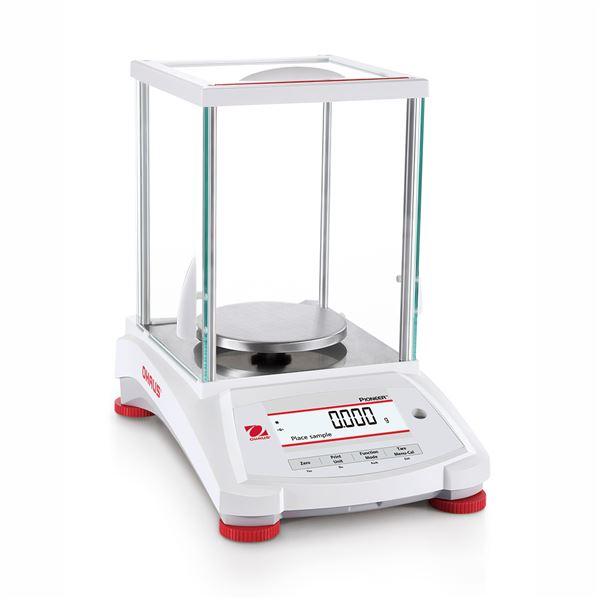
The Ohaus Explorer and Pioneer series are commonly used in laboratories that need accurate weighing performance while maintaining budget flexibility. The Pioneer series is one of the most popular analytical balance lines for routine laboratory applications, known for dependable performance and straightforward operation. Some Ohaus analytical balances offer readability down to 0.01 mg for small-sample work. Businesses also appreciate the company’s broad product selection and strong balance between affordability and reliability.
For organizations seeking dependable laboratory weighing solutions at competitive pricing, Ohaus balances often provide one of the best overall value options available. Businesses looking for reliable Ohaus analytical balances and precision balances. One of the most popular Ohaus analytical balance models is Ohaus PX224 Pioneer Analytical Balance
Analytical Balance Models: Create A Comparison Framework
When comparing laboratory balances, businesses should match models to specific weighing tasks rather than compare only by brand or price, usually evaluating them based on readability, capacity, calibration systems, compliance features, and intended laboratory applications. Analytical balances typically provide readability down to 0.0001 g, while precision balances may offer readability ranging from 0.001 g to 0.1 g depending on the application. High-precision laboratories, such as those in pharmaceutical or research fields, typically require analytical balances with a readability of 0.1 mg or better.
Mettler Toledo analytical balances are often chosen for highly regulated laboratories requiring advanced automation and compliance systems. Sartorius analytical balances are preferred for high-precision research and pharmaceutical environments. Ohaus balances are commonly selected for general laboratory use, educational labs, and cost-sensitive settings that need reliable performance for basic weighing within a controlled budget.
Creating a comparison framework allows businesses to evaluate key features, intended applications, and long-term operational value.
Detailed Feature Comparison: Analytical Balance Versus Precision Balances
Analytical balances and precision balances serve different laboratory purposes. Analytical balances are designed for extremely sensitive measurements where even microscopic weight differences matter, especially in demanding laboratory environments where exceptional accuracy is needed. Precision balances are typically used for larger sample sizes and applications requiring slightly lower sensitivity.
Analytical balances from Sartorius and Mettler Toledo often include draft shields, advanced environmental compensation systems, automatic calibration, and sophisticated data recording functions. As precision instruments, they are built for accurately measuring small samples and delivering accurate weighing results. These features help improve accuracy and reduce operator errors.

Precision balances from Ohaus and other manufacturers are widely used in industrial labs, educational settings, manufacturing environments, and quality control applications where durability and fast operation are important. They are well suited to routine and larger-scale weighing tasks that still require accurate results and reliable measurements.
Businesses should evaluate factors such as environmental control, stabilization time, repeatability, linearity specifications, connectivity options, touchscreen functionality, software integration, and environmental resistance when comparing analytical and precision balances.
Suitability For Laboratory Applications
Different laboratory environments require different balance capabilities. Pharmaceutical laboratories often prioritize compliance, traceability, and ultra-high precision. Research labs may focus on measurement sensitivity and data recording features to support reproducible science with accurate and reliable measurements, and some applications require accurate weighing results because the workflow depends on tight control. Industrial environments usually prioritize durability, capacity, and operational simplicity.
Mettler Toledo balances are highly suitable for pharmaceutical manufacturing and advanced compliance-driven laboratories. Sartorius balances excel in research, biotechnology, and scientific analytical applications, and are also favored by biopharmaceutical companies and quality control operations that demand extreme measurement control. Ohaus balances are highly versatile and perform well in educational laboratories, quality control facilities, and general laboratory environments.
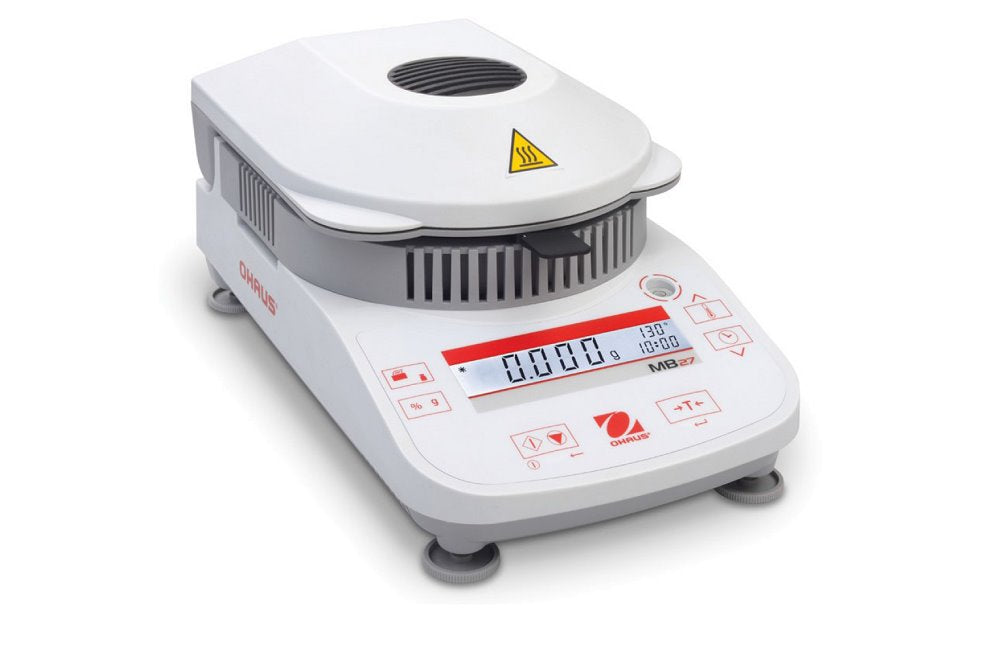
Laboratory professionals and lab managers should carefully match the balance specifications to the way the lab operates, including the demands of different laboratory settings and quality control environments, rather than selecting equipment based solely on price or brand reputation. Laboratories needing fast material testing and moisture determination often browse moisture analyzer collections.
Regulatory Compliance And Data Integrity
Modern laboratories must comply with strict industry regulations regarding data accuracy, calibration records, and operational traceability. This is especially important in pharmaceutical, biotechnology, food, and chemical industries.
Both Mettler Toledo and Sartorius provide advanced compliance features such as user management systems, audit trails, secure data storage, automatic calibration reminders, and data logging for traceability. They also support seamless integration with laboratory information management systems and other instruments through advanced connectivity options.
Ohaus also offers compliance-ready laboratory balances, especially within higher-end product lines, with a modular design that can better accommodate future software updates or changing regulatory needs while remaining suitable for many regulated environments at a more affordable price.
Businesses operating under FDA, GMP, GLP, or ISO laboratory standards should carefully evaluate compliance features before purchasing laboratory balances, including support for standard operating procedures and dependable GLP/GMP workflows in regulated labs.

Laboratory Balance Selection Checklist
Before purchasing a laboratory balance, businesses should evaluate several important factors. This checklist helps identify the right balance for routine or advanced weighing tasks:
-
Required readability and capacity
-
Laboratory application type
-
Calibration requirements, including evaluating internal versus external calibration needs
-
Compliance and audit trail needs
-
Environmental factors such as drafts, vibration, temperature, and static electricity
-
Connectivity and data management, including data logging and software integration needs
-
Ease of maintenance
-
Service and calibration support
-
Long-term reliability
-
Budget and operational costs
Using a structured selection checklist helps laboratories avoid purchasing equipment that may not meet future operational or regulatory requirements.
Final Recommendations For Businesses Choosing Lab Balances
Choosing between Ohaus, Sartorius, and Mettler Toledo depends largely on the business’s specific laboratory needs, budget, and compliance requirements.
Businesses seeking advanced automation, sophisticated compliance systems, and premium laboratory technology often choose Mettler Toledo for its advanced features. Laboratories focused on ultra-high analytical precision, high accuracy, and scientific research frequently prefer Sartorius balances. Budget conscious labs looking for dependable performance, user friendly features, and reliable accuracy often select Ohaus balances.
Each brand offers reliable laboratory weighing solutions, but the best choice depends on balancing performance, budget, workflow efficiency, and long-term operational goals. By carefully evaluating laboratory requirements and comparing balance features, businesses can select weighing equipment that supports accurate results, productivity, and compliance in laboratory and chemical analysis workflows for years to come.
Frequently Asked Questions
What is the most accurate analytical balance?
The most accurate analytical balances are ultra-micro and micro balances designed for extremely sensitive laboratory applications. High-end models from Sartorius and Mettler Toledo can measure down to microgram and sub-microgram levels. The best balance depends on the laboratory application, required readability, environmental conditions, and regulatory requirements.
What is the purpose of mettler balance?
A Mettler Toledo balance is designed to provide highly accurate weighing for laboratory, pharmaceutical, industrial, and research applications. These balances are commonly used for sample preparation, formulation, quality control, moisture analysis, and scientific testing where precision and compliance are critical.
What are the 4 types of balances?
The four common types of laboratory balances are analytical balances, precision balances, micro balances, and moisture analyzers. Analytical balances are used for highly accurate measurements, precision balances handle larger capacities with moderate accuracy, micro balances measure extremely small samples, and moisture analyzers determine moisture content in materials using heating technology.