Choosing the right laboratory balance for chemical analysis and sample preparation is essential for producing reliable measurements, consistent formulations, and efficient laboratory workflows. Laboratories may need to weigh reagents, standards, powders, chemicals, filters, containers, and prepared samples at quantities ranging from several kilograms to only a few milligrams. Because these applications have different accuracy requirements, there is no single laboratory balance that is ideal for every task. Readability, capacity, repeatability, minimum weight, calibration method, stabilization time, environmental sensitivity, connectivity, and compliance requirements should all be considered before selecting a balance. Understanding these factors helps laboratories choose equipment that provides the required level of precision without paying for sensitivity or features that the application does not need.
Introduction to Laboratory Balances and Laboratory Scales
Laboratory balances and laboratory scales are instruments designed to measure mass for scientific, quality-control, educational, pharmaceutical, industrial, and research applications. In chemical analysis, reliable weighing is particularly important because the measured quantity of a substance can influence solution concentrations, formulations, sample preparation, and subsequent analytical results. Laboratory balances range from general-purpose precision models to highly sensitive analytical, semi-micro, and micro balances. While the terms balance and scale are sometimes used interchangeably in everyday language, laboratory applications commonly use balances when higher precision is required. Selecting the appropriate instrument starts with understanding what will be weighed, the smallest sample size, the largest total load, and the accuracy required by the analytical method. Explore our Laboratory Balances and Weighing Scales to compare weighing solutions for laboratory and sample preparation applications.
Types of Laboratory Balances and Lab Balances
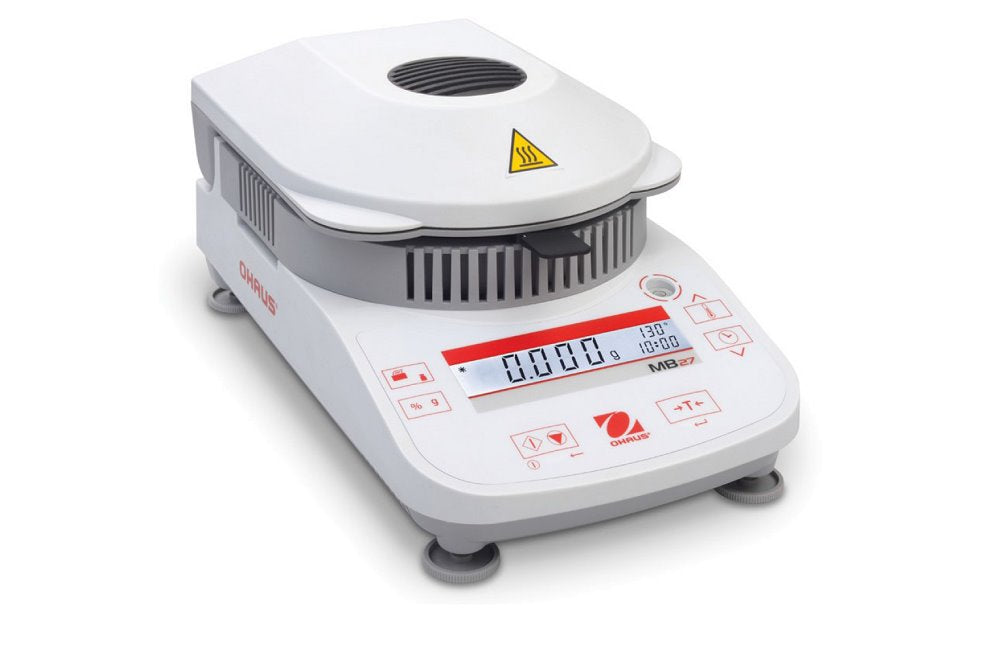
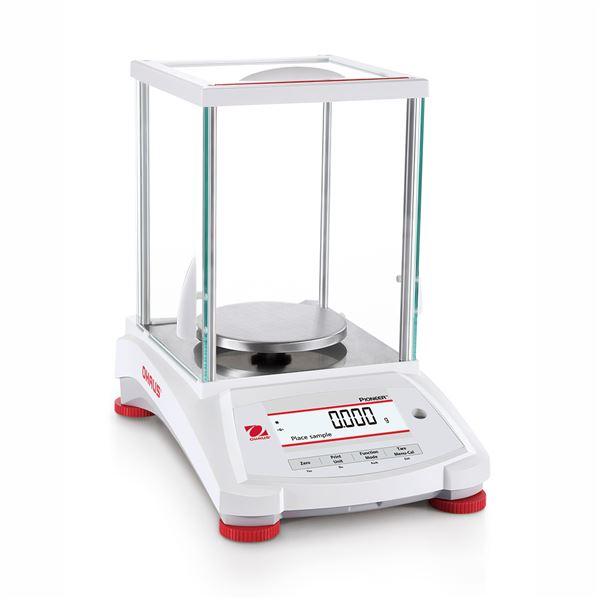
Different types of laboratory balances are designed for different levels of sensitivity and capacity. Precision balances are commonly used for routine sample preparation, formulation, larger quantities, general laboratory weighing, routine weighing tasks, and material testing. Analytical balances provide finer readability for quantitative analytical work and smaller samples. Semi-micro and micro balances extend measurement sensitivity further for applications involving extremely small quantities. Top-loading balances can provide a practical combination of capacity, speed, and convenience for general weighing tasks. Instead of automatically purchasing the most sensitive instrument available, laboratories should select a balance category that matches their actual sample sizes, tolerances, workflow, and environmental conditions to avoid unnecessary cost and choose the correct balance for the workflow.

Analytical Balances and High Precision Analytical Balance
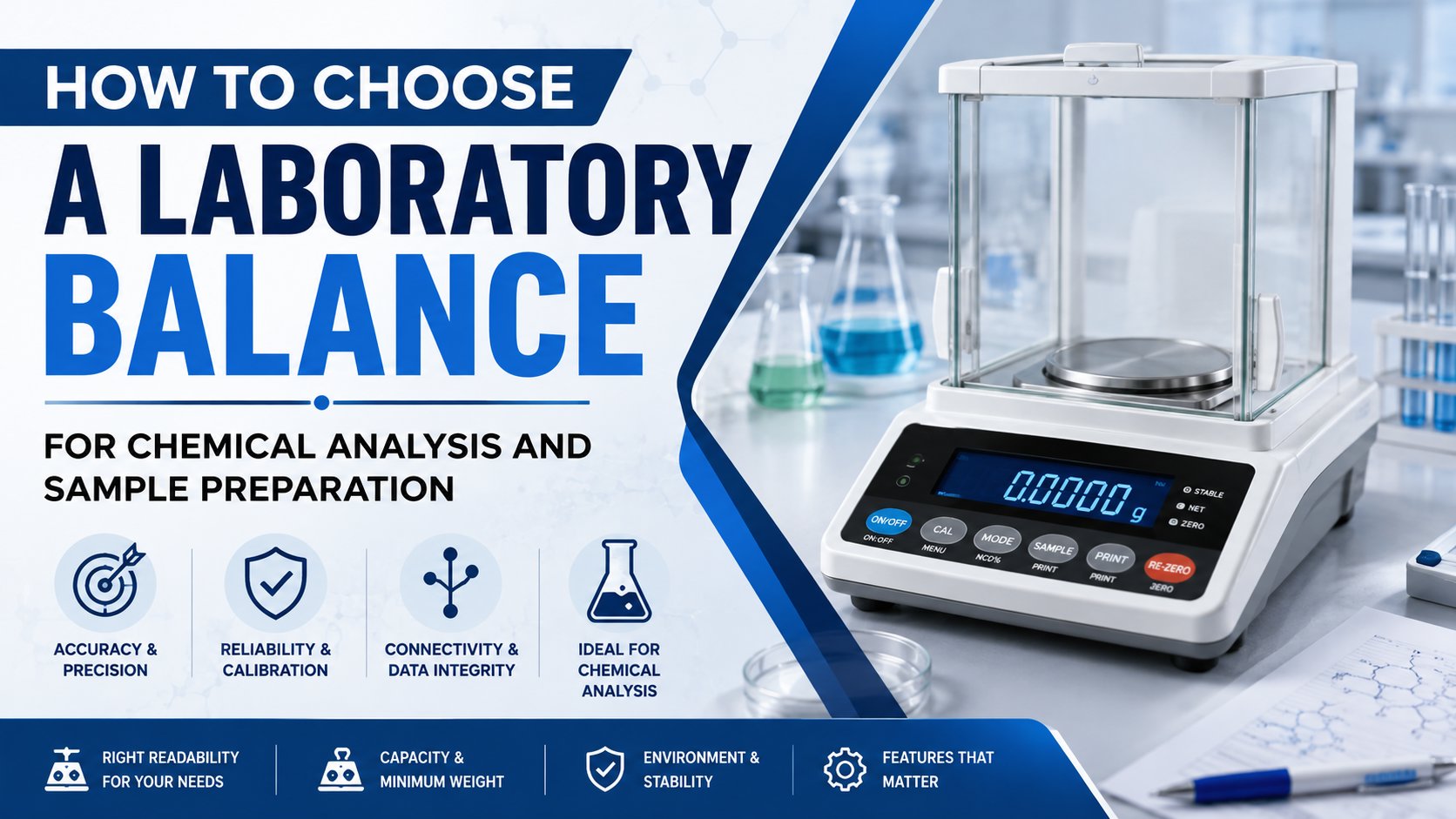
Analytical balances are widely used for chemical analysis where small differences in mass must be measured reliably, especially for critical measurements and trace level analysis in chemical work. Many analytical balances provide readability of 0.1 mg (0.0001 g), offering higher readability and milligram accuracy for small samples, and include a draft shield that protects the weighing process from air currents and helps preserve weighing accuracy. They are commonly used for preparing analytical standards, weighing reagents, quantitative chemical analysis, formulation, quality control, and other high-precision applications. When choosing a high precision analytical balance, laboratories should compare more than readability. Repeatability, linearity, minimum weight, maximum capacity, stabilization characteristics, calibration options, and environmental sensitivity all influence real-world weighing performance because these instruments are extremely sensitive. If an application requires measurements below the practical capabilities of a 0.1 mg analytical balance, a semi-micro or micro balance may be more appropriate, but the most sensitive option is justified only when exceptional accuracy is truly required. Explore our Analytical Balances for demanding laboratory and chemical analysis applications.
Precision, Top-Loading, and Micro Lab Balances
Precision and top-loading balances are practical when laboratories need greater capacity or faster routine weighing without the extremely fine readability of an analytical balance, and they are often the right lab balance for general lab weighing when analytical-level sensitivity is unnecessary. They can be useful for weighing larger reagent quantities, preparing solutions, formulation work, production-related testing, routine weighing tasks, material testing, food testing, and general sample preparation. Depending on the model, precision balances may provide readability ranging from relatively coarse increments down to milligram-level measurements while offering considerably higher capacities than many analytical balances, making it important to check the maximum weight or how much weight the balance can handle. At the other end of the sensitivity range, semi-micro balances commonly reach 0.01 mg (0.00001 g) readability, while microbalances can provide even finer measurements. These highly sensitive instruments are useful for specialized applications but require greater environmental control, a stable environment, and careful sample handling for optimal performance and accurate readings. For extremely small sample measurements, compare our Semi-Micro Balances for high-precision laboratory applications.
Key Features To Compare For Laboratory Balance Selection
Readability is one of the most visible balance specifications, but readability, repeatability, minimum weight, and capacity are the key factors to compare during selection. Readability represents the smallest increment displayed by the instrument and does not automatically represent accuracy or the smallest quantity that can be weighed reliably. As a general rule, minimum sample weight should exceed balance readability by 1,000 times. Laboratories should compare repeatability, linearity, minimum weight, weighing capacity, stabilization time, pan dimensions, draft-shield design, overload protection, leveling features, display quality, and operating controls. The total load should include both the sample and any container or vessel placed on the weighing pan. A balance with insufficient capacity can restrict normal workflows, while unnecessarily fine readability may increase unnecessary cost and environmental sensitivity without improving precise measurements in practice.

Minimum weight deserves particular attention when chemical analysis involves small quantities. A balance capable of displaying a very small increment does not necessarily provide acceptable measurement uncertainty at that same mass. Laboratories should establish the smallest net sample they expect to weigh and compare that requirement against the balance's demonstrated performance and their applicable tolerance. Repeatability is especially important because variability becomes proportionally more significant as sample mass decreases. Evaluating these specifications together provides a more realistic picture of whether a balance is fit for the intended chemical-analysis procedure. You can also browse our complete Balances and Scales selection when comparing readability, capacity, and laboratory weighing requirements.
Calibration: External Calibration, Internal Calibration, and Maintenance
Calibration and routine performance verification help maintain dependable laboratory weighing. Balances with external calibration require certified weights and an established procedure for checking or adjusting performance. Internal calibration models contain a built-in calibration mechanism that makes routine adjustment more convenient, and some advanced balances use automatic internal calibration in response to time or temperature-related conditions. Even with internal features, proper calibration is still needed, and many labs schedule it every 3 to 6 months depending on use and quality requirements. Internal calibration can be especially useful in laboratories with frequent weighing activity, although it does not eliminate the need for appropriate performance verification or documented quality procedures. For laboratories that need automatic calibration and advanced connectivity, consider the Ohaus EXP124/AD Explorer Plus Analytical Balance, 120 g × 0.1 mg
Maintenance is equally important for long-term accuracy. The weighing pan and chamber should be kept clean, spills should be addressed promptly, and the balance should be inspected regularly for contamination or physical damage. Laboratories should establish calibration, performance-check, cleaning, and preventive-maintenance schedules appropriate to the instrument's use and quality requirements, since regular maintenance extends the life of the balance and supports optimal performance. For regulated laboratories, records of calibration, verification, maintenance, and corrective actions may also be necessary to demonstrate regulatory compliance and that the balance remained suitable for its intended application.

Environmental Factors for High Precision Weighing
Environmental conditions can significantly influence high-precision measurements. Air currents, vibration, temperature fluctuations, humidity, static electricity, direct sunlight, and unstable work surfaces can cause readings to fluctuate or stabilize slowly. The effect becomes increasingly important as balance readability becomes finer. Analytical, semi-micro, and micro balances should therefore be installed on a stable laboratory bench or weighing table in a stable environment with a stable temperature for high-precision work, away from doors, windows, ventilation outlets, fans, centrifuges, heavy equipment, and high-traffic areas. Where bench vibration is a concern, anti vibration tables may be appropriate because movement can affect accuracy and contribute to measurement drift.
Sample conditions can also influence measurements. Hot or cold samples should generally be allowed to equilibrate appropriately before sensitive weighing because temperature shifts can create air movement and other measurement effects. When weighing chemicals, the weighing pan should resist aggressive solvents and materials. Hygroscopic materials may gain moisture, while volatile samples can lose mass during weighing. Static electricity can be especially problematic with powders, plastic containers, filters, and other insulating materials. Draft shields, appropriate containers, careful handling, environmental control, and anti-static equipment where necessary can help laboratories improve weighing accuracy by limiting factors that affect accuracy, supporting maintaining precision and accurate readings.
Data Integrity, Connectivity, and Data Output for Lab Balances
Modern laboratory balances can provide much more than a displayed weight. Depending on the model, interfaces such as USB, RS-232, Ethernet, or other connectivity options can transfer measurements to computers, printers, laboratory software, or data-management systems, and the balance supports direct data transfer for common integration needs. Direct electronic transfer can reduce manual transcription and make high-volume sample workflows more efficient. Laboratories should evaluate compatibility with their existing systems before purchasing equipment, particularly when results must move automatically into LIMS or ERP systems or analytical workflows. LIMS integration enhances data management capabilities and supports regulatory compliance.
As essential tools for data integrity in modern laboratories, balances become especially important in regulated environments. Depending on the balance and software, features may include user management, stored methods, password controls, timestamps, audit trails, result identification, and electronic data transfer. Not every laboratory requires advanced data-management functionality, so these features should be selected according to the actual workflow and applicable quality requirements. The goal is to choose connectivity that improves traceability and productivity without adding unnecessary complexity.
Comparing Analytical And Precision Balances
The choice between an analytical balance and a precision balance depends primarily on the required sensitivity, sample quantity, capacity, and working environment. An analytical balance is generally the better option when chemical analysis requires small samples and fine readability, commonly around 0.1 mg, especially for critical measurements and, when relevant, trace level analysis. Its draft shield and sensitive weighing system make it suitable for quantitative analytical work, standards preparation, and other applications where small mass differences matter. The A&D Weighing GH-120 Phoenix Analytical Balance, 120 g × 0.1 mg is one high-precision option for demanding laboratory weighing applications.

A precision balance is often the right balance for larger samples, routine weighing tasks, routine reagent preparation, formulation, and general weighing tasks. Precision balances usually sacrifice some sensitivity in exchange for greater capacity, easier sample access, and often faster everyday operation. For example, a laboratory might use a precision balance to weigh larger quantities during initial solution preparation or material testing and an analytical balance for the smaller quantities required to prepare a reference standard. Using different balances for different stages of a workflow can sometimes be more practical than expecting one instrument to handle every weighing requirement.
How To Choose: Step-By-Step Lab Balance Checklist
Begin by identifying the smallest net sample that will routinely be weighed and the measurement tolerance required by the method, since these, along with capacity, are key factors in choosing the correct balance. Next, determine the maximum total load, including containers and tare vessels, so that the selected capacity or maximum weight provides adequate working room. Choose the appropriate readability based on the application rather than simply selecting the smallest available increment. Compare repeatability, minimum weight, linearity, stabilization time, and other performance specifications that affect the intended measurement.
Next, determine whether internal or external calibration better fits the laboratory's workflow and quality procedures, because proper calibration is essential and external checks should use certified weights. Evaluate the installation environment for vibration, drafts, temperature changes, static electricity, and available bench space to support a stable environment with stable temperature. Consider pan and draft-shield dimensions based on the containers normally used. Review connectivity and data-integrity requirements, especially if measurements need to be transferred to computers, printers, or laboratory systems, including LIMS or ERP systems when data must feed directly into broader workflows. Finally, compare warranty, technical support, calibration services, replacement parts, accessories, manufacturer reputation, and total cost of ownership before making the purchase.
Final Recommendations For Choosing Laboratory Balances And Laboratory Scales
The best laboratory balance for chemical analysis and sample preparation is not necessarily the most expensive model or the instrument with the greatest number of decimal places. It is the balance whose capacity, readability, minimum weight, repeatability, calibration capabilities, environmental requirements, and workflow features match the laboratory's actual measurement needs without creating unnecessary cost. A precision or top-loading balance can be an efficient solution for larger quantities and routine sample preparation, while a 0.1 mg analytical balance is often better suited to demanding quantitative analysis. Semi-micro and micro balances should be considered when genuinely smaller samples and tighter measurement requirements justify their additional sensitivity. For higher-capacity routine laboratory weighing, consider the A&D Weighing GX-10001A Precision Balance, 10200 g × 0.1 g.
Before purchasing, laboratories should clearly define what they need to weigh, how much weight is involved, and how accurate the readings must be, along with the environmental conditions in which the balance will operate and how weighing data will be recorded. Comparing these requirements against manufacturer specifications and available support can help avoid both under-specifying and over-specifying the instrument. By choosing the right lab balance around the actual chemical-analysis workflow rather than readability alone, laboratories can achieve reliable measurements, efficient sample preparation, more precise measurements, and better long-term value from their weighing equipment.
Frequently Asked Questions (FAQ)
Which laboratory weighing balance is the best?
The best laboratory weighing balance depends on the required readability, capacity, minimum weight, repeatability, and application, and the best choice is the correct balance for the task rather than simply the most sensitive model. Precision balances are well suited to routine sample preparation and larger quantities, while analytical balances are better for high-precision work, critical measurements, and trace level analysis. For extremely small samples, a semi-micro or micro balance may be more appropriate.
What are the best analytical balances?
The best analytical balances are those that match the laboratory’s actual weighing requirements. Important features to compare include 0.1 mg readability for exceptional accuracy and higher readability, repeatability, minimum weight, capacity, stabilization time, calibration options, draft-shield design, and connectivity. Laboratories should also consider internal versus external calibration, environmental conditions, technical support, and compliance requirements before choosing a model, with proper calibration and a stable environment needed for optimal performance.
What type of balances are used in laboratories?
Laboratories commonly use precision balances, analytical balances, semi-micro balances, and microbalances. Precision balances are useful for general lab weighing, sample preparation, and routine weighing tasks, analytical balances for high-precision measurements, and semi-micro or microbalances for very small samples requiring greater sensitivity. Some laboratories also use portable balances, which are battery-powered for field use.
What are the three types of balances?
Three common types of laboratory balances are precision balances, analytical balances, and microbalances. Precision balances are commonly chosen for general weighing tasks where maximum weight and capacity matter more than the finest readability, analytical balances commonly offer 0.1 mg readability, and microbalances are extremely sensitive instruments used in specialized laboratory settings for extremely small samples requiring much finer measurement sensitivity.