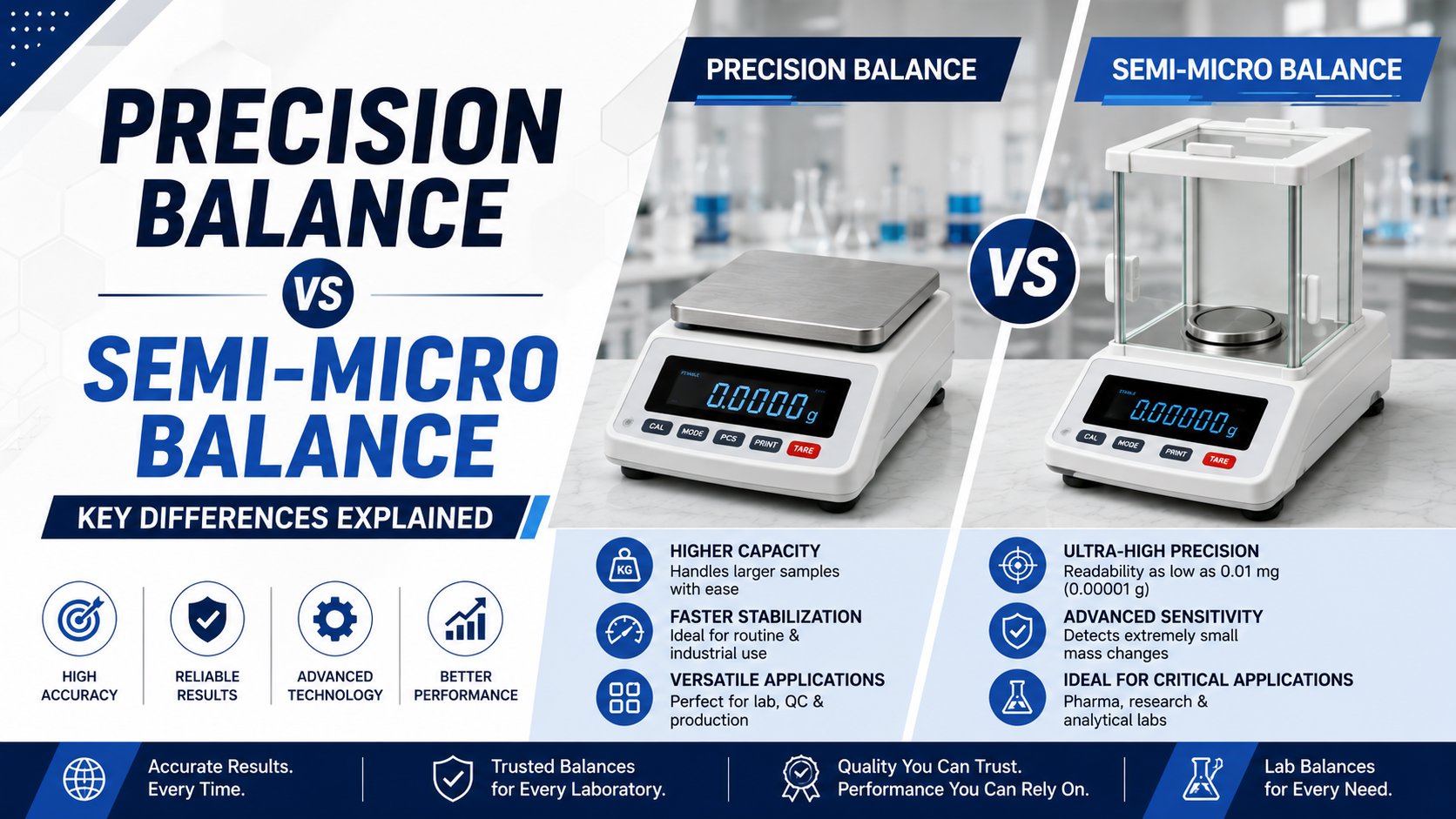
Choosing the right laboratory balance is essential when accurate and repeatable weighing results are critical to your work. In short, the key differences between a precision balance and a semi-micro balance come down to readability, sensitivity, capacity, environmental requirements, and use case: precision balances support faster routine weighing with higher capacity, while semi-micro balances deliver much finer readability—often around 0.01 mg—for very small samples and demanding analytical work. For laboratory professionals, researchers, quality control personnel, and technicians, that distinction affects both result reliability and day-to-day efficiency. A precision balance is generally a practical choice for routine laboratory, quality control, formulation, and production weighing where accuracy and higher capacity are both important. A semi-micro balance is designed for much smaller sample quantities and applications requiring substantially finer readability. This guide compares their features and applications, explains calibration and environmental factors that affect accuracy, and outlines the selection and maintenance points that help laboratories choose the right balance without paying for unnecessary sensitivity or compromising measurement quality.
What Is a Laboratory Balance?
A laboratory balance is a precision weighing instrument used to determine the mass of samples in scientific, pharmaceutical, chemical, industrial, educational, and quality control environments. Unlike basic weighing scales, laboratory balances are engineered to provide greater readability, repeatability, and measurement stability. Different types of lab balances are available for different levels of precision, including precision balances, analytical balances, semi-micro balances, and microbalances. Selecting the correct type depends on factors such as the smallest amount you need to weigh, maximum sample weight, required readability, repeatability, environmental conditions, calibration requirements, and regulatory expectations. Laboratories performing routine and high-accuracy weighing can explore our complete range of Precision Balances to compare capacities, readability options, calibration methods, and models designed for research, quality control, formulation, and production applications.
Analytical and Precision Balances: Quick Overview
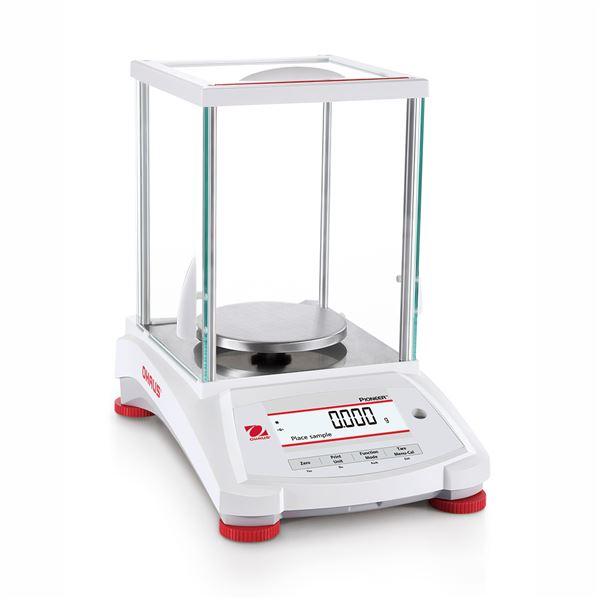
Precision balances are commonly used when laboratories need dependable measurements combined with relatively high weighing capacity and fast stabilization. Depending on the model, precision balances may provide readability such as 0.1 g, 0.01 g, or 0.001 g and can accommodate larger samples than highly sensitive analytical instruments. Analytical balances are designed for finer measurements and commonly provide readability down to 0.0001 g, or 0.1 mg. Because analytical balances are more sensitive to air movement and other environmental influences, they commonly incorporate a draft shield around the weighing pan. Both balance types can provide excellent laboratory performance when selected according to the intended application. For applications requiring finer laboratory measurements, explore our selection of Analytical Balances designed for pharmaceutical research, analytical chemistry, sample preparation, and quality control environments.
Key Differences: Precision Balance vs Semi-Micro Balance
The most important difference between a precision balance and a semi-micro balance is the level of readability and sensitivity. Precision balances are designed for accurate routine use and accurate measurements while generally offering greater capacity and easier operation in everyday laboratory or production environments. Semi-micro balances move into a much finer measurement range and commonly offer readability of 0.01 mg, or 0.00001 g, making them suitable for very small sample quantities, critical measurements, and demanding analytical applications. Because semi-micro balances detect much smaller mass changes, environmental control, correct installation, careful sample handling, and consistent operating procedures become increasingly important. In practical terms, a precision balance prioritizes versatility, capacity, and speed, while a semi-micro balance prioritizes ultra high precision. Laboratories that require extremely fine readability for demanding analytical work can compare our complete range of Semi-Micro Balances for high-sensitivity weighing applications.

Analytical Balance: Key Features and High Precision
Analytical balances provide a high level of precision for laboratory applications where small differences in sample mass are important and milligram accuracy is required. A typical analytical weighing balance may provide 0.1 mg readability, offering fine readability, and include a draft shield to reduce the influence of air currents around the weighing pan for more accurate readings. It typically uses electromagnetic force compensation technology for exceptional accuracy. Depending on the model, additional features may include internal calibration, touchscreen controls, multiple weighing applications, data output, USB or RS-232 connectivity, user management, and compliance-related functionality. Analytical balances are commonly used in pharmaceutical laboratories, chemical analysis, scientific research, pharmaceutical formulation, sample preparation, and quality control. They provide a useful middle ground between routine precision balances and more sensitive semi-micro weighing systems. One option for laboratories requiring 0.1 mg readability is the Sartorius BCE124-1S Entris II Analytical Balance, designed for precise analytical weighing and professional laboratory applications.
Semi-Micro Balance: High Precision Between Analytical and Micro
A semi-micro balance is often the right balance for laboratories that need more sensitivity than a conventional analytical balance but not the extreme sensitivity of a full microbalance. Depending on the model, they are commonly suited to sample sizes around 100–300 g. Semi-micro models commonly reach 0.01 mg readability and are useful when working with very small sample quantities where a 0.1 mg analytical balance may not provide sufficient resolution beyond the milligram range. These instruments are used for demanding pharmaceutical, chemical, research, environmental, trace analysis, and advanced quality control applications. Because their measurements are extremely sensitive, semi-micro balances require careful installation and operation. Drafts, vibration, static electricity, temperature changes, sample temperature, and improper handling can all influence precise measurements. For laboratories requiring a professional semi-micro weighing solution, the Sartorius SECURA225D-1S Secura Semi-Micro Balance provides a dedicated option for highly sensitive laboratory measurements.

Lab Balances: Analytical and Precision Balances Compared
The correct balance depends on the precision needed for your application. Precision balances are well suited to routine weighing, formulation, sample preparation, manufacturing, educational laboratories, routine laboratory tasks, general weighing, and quality control tasks that require good accuracy with greater weighing capacity. Analytical balances are more appropriate when measurements must be made at the 0.1 mg level. Semi-micro balances go further by resolving smaller mass differences, making them suitable for more demanding analytical work. Rather than automatically selecting the balance with the finest readability, laboratories should match the correct balance type to their smallest required sample weight, allowable uncertainty, working capacity, operating environment, and quality requirements. The Sartorius BCE223-1S Entris II Precision Balance is an example of a professional precision balance for laboratory applications where dependable routine weighing and fine readability are required.
Calibration Options: External Calibration and Internal Methods
Regular calibration is essential for confirming that a laboratory balance continues to produce reliable measurements. External calibration requires the operator to use suitable calibration weights according to the manufacturer's procedure, while balances with internal calibration contain an internal calibration mechanism that can simplify routine adjustment. Some advanced models can initiate internal adjustment automatically in response to predefined conditions such as temperature changes or scheduled intervals. Many labs calibrate balances every 3 to 6 months, depending on procedures and risk. The appropriate calibration approach depends on laboratory procedures, regulatory requirements, balance specifications, frequency of use, and available calibration resources. Regardless of the method, laboratories should follow the balance manufacturer's instructions and use appropriate traceable or certified weights when required by their quality system to help maintain accuracy and support reliable results. For calibration weights, mass sets, and related tools, browse our Calibration Equipment and Accessories to support routine balance verification and laboratory calibration procedures.
Environmental Factors Affecting Accuracy
Environmental conditions become increasingly important as balance readability becomes finer, and controlling them is essential for weighing accuracy. Air currents, vibration, static electricity, stable temperature, temperature fluctuations, humidity changes, direct sunlight, and unstable work surfaces can influence weighing results. A precision balance used for routine measurements may tolerate normal laboratory conditions better than a semi-micro balance, but every high-precision balance benefits from a stable installation. Sensitive balances should be positioned on a sturdy weighing table, or on anti-vibration tables for highly sensitive setups, away from doors, ventilation outlets, heavy equipment, and high-traffic areas. Samples should also be allowed to reach suitable environmental equilibrium before weighing when temperature differences could affect measurement stability, and proper control of these conditions supports optimal performance.

Key Features to Check Before Buying a Lab Balance
Before purchasing a laboratory balance, compare readability, smallest increment, balance capacity, maximum weight, repeatability, linearity, stabilization time, calibration method, weighing pan dimensions, and available weighing applications. For highly sensitive balances, evaluate draft shield design and environmental compensation features as well. Laboratories that need electronic documentation should consider USB, RS-232, Ethernet, or other available connectivity options for data transfer and compatibility with printers, computers, or laboratory information systems. User access controls, data management features, compliance support, available accessories, warranty coverage, technical service, and manufacturer reputation can also influence long-term value. The best balance is not simply the one with the smallest readability—it is the instrument whose specifications match the actual measurement requirements of the application.
Key Considerations When Choosing a Lab Balance
Begin the selection process by defining the right balance for the job based on what you need to weigh and how accurately you need to measure it. Consider the typical and maximum sample weight, smallest sample quantity, acceptable uncertainty, required readability, frequency of use, and environmental conditions. A business performing routine formulation or production checks or other routine weighing tasks may benefit more from the higher capacity and faster workflow of a precision balance, including in industrial settings such as production floors, while a research or analytical laboratory working with very small quantities may require a semi-micro model to support regulatory compliance where applicable. Available workspace, operator training, calibration procedures, regulatory requirements, connectivity needs, and total cost of ownership should also be considered before purchasing.
Maintenance and Calibration Practices for High Precision Balances
Regular maintenance helps preserve accuracy and support precise measurements or reliable weighing processes over time for precision, analytical, and semi-micro balances. Keep the weighing pan and surrounding chamber free from dust, spilled samples, and chemical residue, and clean removable components according to the manufacturer's instructions, using a soft brush for delicate dust removal around sensitive components when needed. Check that the balance remains properly leveled and avoid exceeding its maximum capacity to help preserve accurate measurements. Calibration or performance verification should be performed at intervals established by the laboratory's procedures, manufacturer recommendations, risk assessment, and applicable quality requirements. Highly sensitive semi-micro balances may require particularly careful environmental monitoring and performance checks, especially when used in critical or highly sensitive weighing processes. Scheduled professional servicing can also help identify wear or performance problems before they lead to downtime or unreliable results.

Practical Recommendations: When To Choose Each Balance
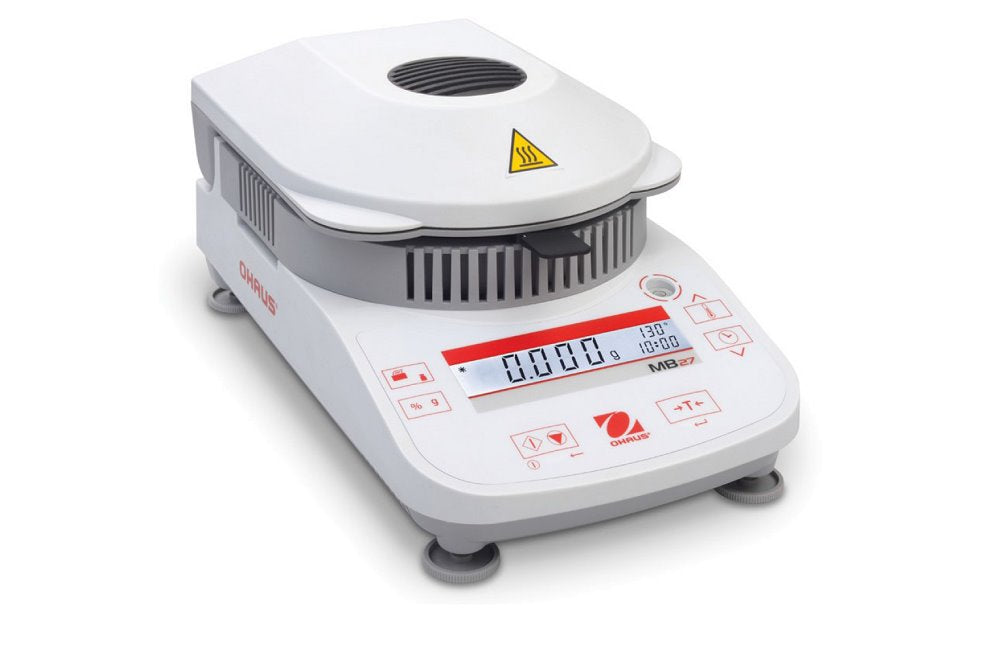
Choose a precision balance when your priority is reliable routine weighing, greater capacity, relatively fast stabilization, and flexibility across laboratory or industrial applications; for this kind of work, top loading balances are also a common format. It is often the practical option for formulation, production, food testing, education, sample preparation, and general quality control. Choose an analytical balance when your work requires approximately 0.1 mg readability, greater sensitivity, and a weighing chamber that helps protect delicate measurements for pharmaceutical, chemical, research, or analytical applications. Choose a semi-micro balance when measurements require approximately 0.01 mg readability and the application demands the precision needed to reliably resolve very small changes in mass. If your application requires even finer measurement capability, a microbalance may be more appropriate. Portable balances may be worth considering only when mobility matters more than ultra-fine sensitivity. For moisture analysis, a dedicated instrument is usually more appropriate than a standard lab balance, and always compare the actual specifications of individual models rather than relying solely on the balance category name.
Conclusion
Understanding the differences between precision balances and semi-micro balances makes it easier to invest in laboratory weighing equipment that matches your actual application. Precision balances provide an effective combination of capacity, speed, accuracy, and versatility for routine laboratory and business use, while semi-micro balances offer substantially finer readability for demanding analytical work with very small samples. Analytical balances provide another important option between these requirements. Before buying, evaluate readability, capacity, repeatability, calibration, environmental conditions, connectivity, compliance needs, maintenance requirements, and long-term service support. Choosing a laboratory balance based on real measurement requirements can improve workflow efficiency, reduce weighing errors, and provide dependable results for years to come.
Frequently Asked Questions (FAQ)
What are the three types of balances?
Three common types of laboratory balances are precision balances, analytical balances, and microbalances. Precision balances are ideal for routine weighing with higher capacities, analytical balances provide finer readability for laboratory analysis, and microbalances are designed for extremely small sample masses requiring very high sensitivity.
What are the key differences between an analytical balance and a precision balance?
The main differences are readability, sensitivity, capacity, and intended application. Analytical balances commonly offer 0.1 mg (0.0001 g) readability and typically include a draft shield to reduce environmental interference. Precision balances generally have higher weighing capacities and are well suited to routine laboratory, formulation, production, and quality-control applications; many use strain gauge technology or electromagnetic force restoration, depending on design.
What are the two main types of analytical balances?
Analytical balances can broadly be divided into standard analytical balances and semi-micro balances based on their level of readability. Standard analytical balances commonly provide 0.1 mg readability, while semi-micro balances extend that capability to more critical measurements, with finer readability commonly around 0.01 mg for more exacting work such as trace analysis.
What is a precision balance used for?
A precision balance is used for accurate routine weighing with dependable, precise measurements where both precision and practical weighing capacity are important. Common applications include laboratory sample preparation, formulation, quality control, manufacturing, food testing, educational laboratories, research, and production processes, especially where larger samples and practical balance capacity matter more than ultra-fine readability, but they are not intended for the smallest analytical measurements that require draft shields or exceptional sensitivity.