Introduction: Analytical Balances and Laboratory Balances Overview
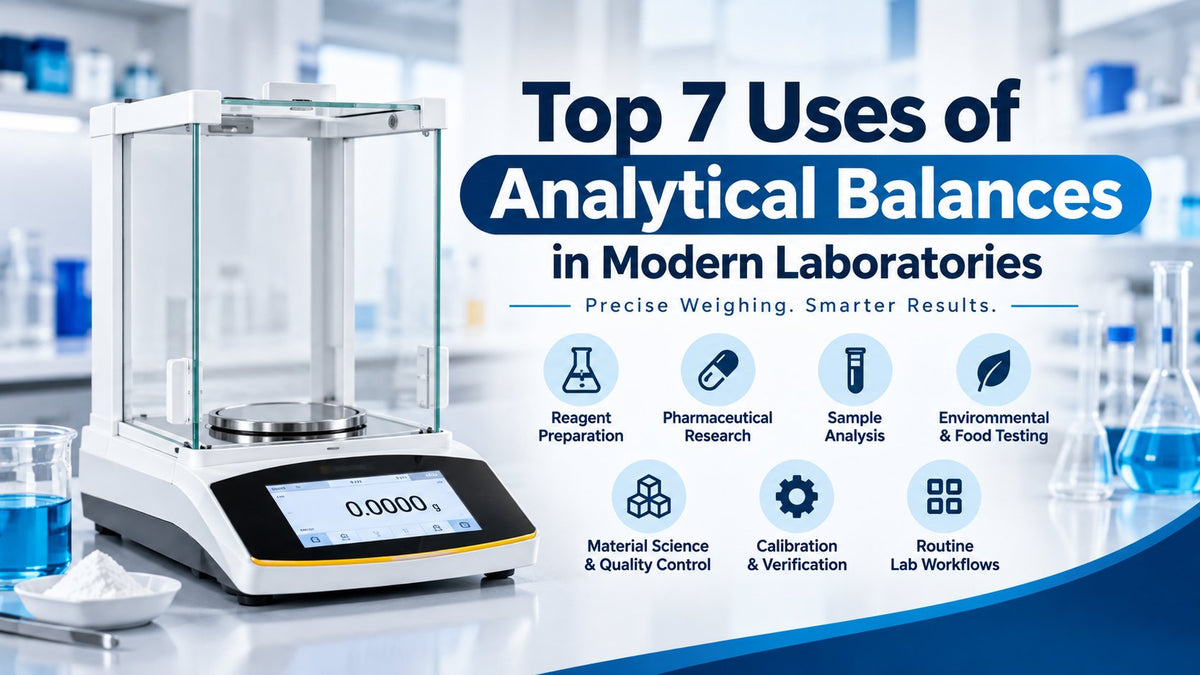
Accurate weighing is one of the most important requirements in modern laboratories, whether the work involves pharmaceutical research, chemical preparation, environmental testing, food analysis, or quality control. Analytical balances are designed for applications where very small differences in mass can influence the accuracy and reliability of laboratory results. Many analytical balances provide readability as fine as 0.0001 g (0.1 mg), while specialized semi-micro and micro balances can measure at even finer levels, with specialized micro variants measuring mass down to 1 μg. This high level of sensitivity makes analytical balances essential when researchers need dependable measurements for small samples, standards, reagents, and reference materials. Explore Analytical Balances for High-Precision Laboratory Weighing.
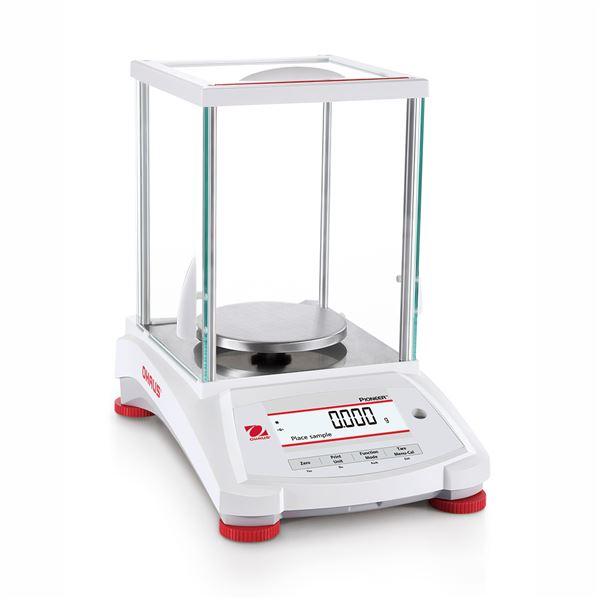
Laboratory balances are available in different capacities, readability levels, and configurations to support a wide variety of weighing applications. A precision balance may be ideal for routine measurements involving larger sample quantities, while an analytical balance is generally preferred when much finer readability is required. Advanced laboratory balances may also include internal calibration, environmental monitoring, data connectivity, touchscreen controls, and application programs that simplify daily weighing procedures. Understanding where analytical balances provide the most value can help laboratories when selecting equipment that supports accuracy, efficiency, and consistent results. Understanding these key factors helps laboratories select equipment for the right applications. Explore Precision Balances for Accurate Routine Laboratory Weighing.
1. Reagent and Chemical Preparation with Analytical Balances
One of the most common uses of analytical balances is preparing reagents, standards, buffers, and chemical solutions. Laboratory procedures often require a precise quantity of a solid chemical to support precise measurements, and this step is critical to the final concentration before it is dissolved or combined with other materials. Even a small weighing error can affect the final concentration of a prepared solution, particularly when working with small quantities or highly concentrated substances. An analytical balance allows laboratory personnel to measure these materials with the fine readability needed for controlled preparation procedures and sample preparation with utmost accuracy.
Analytical balances are particularly useful when preparing reference standards or performing quantitative chemical analysis. Features such as tare functions allow the operator to account for the weight of weighing containers, while stable weighing technology helps produce repeatable measurements. For highly sensitive measurements, a draft shield protects the weighing area from air movement that could otherwise cause the displayed value to fluctuate. Laboratories that routinely prepare reagents can therefore use analytical balances to improve consistency and support repeatable results across repeated procedures while reducing avoidable weighing variation.

2. Pharmaceutical Research and Formulation Development Using Precision Balances
Pharmaceutical laboratories rely heavily on accurate weighing during research, formulation development, testing, and quality control. Researchers may need to measure active pharmaceutical ingredients, excipients, reference standards, and experimental compounds in carefully controlled quantities. Analytical balances provide the fine readability required for small samples, while precision balances are useful when formulation work involves larger quantities but still requires reliable measurement. View Sartorius Entris II Analytical Balance for Precise Laboratory Measurements.
During formulation development, accurate mass measurements help researchers maintain intended ingredient ratios from one experimental batch to another. This is particularly important when comparing different formulations or evaluating how changes in ingredient quantities affect the finished product. Modern precision balances and analytical balances may also provide data transfer and documentation capabilities that help laboratories maintain organized weighing records. Selecting the appropriate balance depends on factors such as sample size, required readability, capacity, environmental conditions, and the laboratory's established procedures.
3. Sample Preparation and Trace Analysis on Laboratory Balances
Sample preparation is another major application for analytical laboratory balances. Before samples can be analyzed using instruments or chemical methods, they often need to be weighed, diluted, extracted, or combined with other materials. When only a small quantity of material is available, the ability to measure small quantities of chemical or biological samples consistently becomes especially important. Analytical balances can provide the sensitivity needed to prepare samples consistently without requiring unnecessarily large amounts of material.
Trace analysis can place even greater demands on weighing equipment because small measurement errors may become significant relative to the amount of sample being tested. A suitable analytical balance can support preparation of standards, reference materials, and small test portions used in analytical procedures in scientific research and academic research. However, the balance itself is only one part of an accurate weighing process. Laboratory personnel should also consider air currents, vibration, temperature stability, static electricity, sample handling, and proper calibration because the wider lab environment can influence sensitive measurements and affect reliable data and reliable measurements.

4. Environmental, Food Testing and Moisture Analysis with Moisture Analyzers
Environmental and food testing laboratories frequently perform weighing as part of sample preparation and analytical testing. Soil, water-treatment residues, powders, ingredients, food samples, and other materials may need to be weighed before additional testing takes place. Analytical and precision balances can help laboratories obtain consistent sample quantities, which is important when results are calculated relative to sample mass.
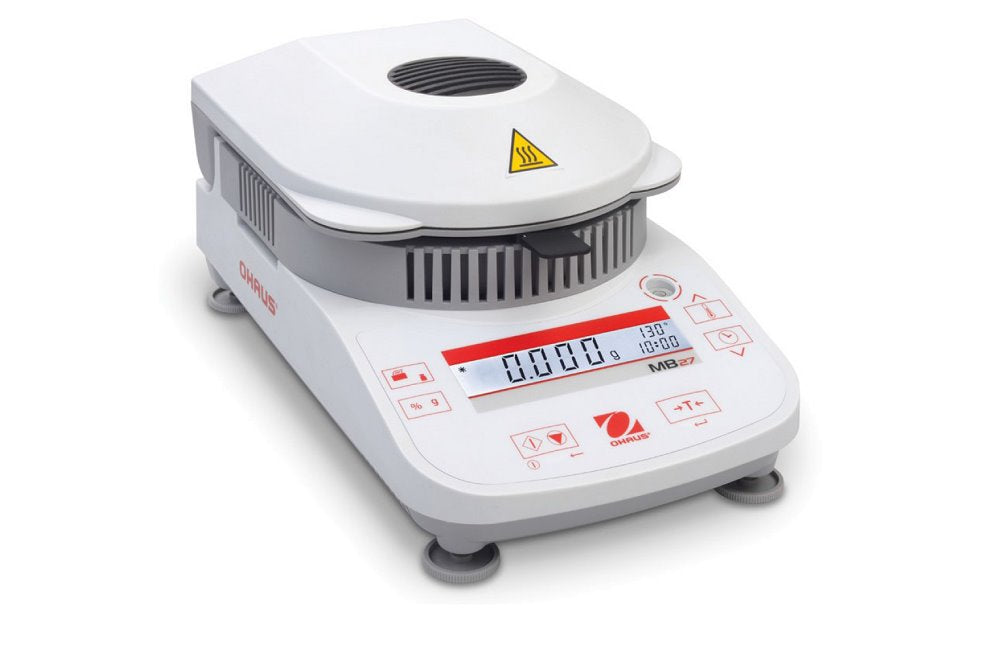
Moisture determination is another important laboratory application, particularly for food, agricultural, pharmaceutical, chemical, and manufacturing samples. A moisture analyzer combines weighing with controlled heating to help determine changes in sample mass as moisture is removed. This can provide a faster alternative to traditional drying procedures for suitable applications. Selecting the correct moisture analyzer requires consideration of sample type, heating technology, temperature range, capacity, readability, measurement accuracy, and the testing method being used. For laboratories performing both routine weighing and moisture determination, analytical balances, precision balances, and moisture analyzers can serve complementary roles within the overall workflow. They also serve different purposes than equipment intended for general weighing tasks, which typically offers less precision. Explore Moisture Analyzers for Laboratory Moisture Determination.
5. Material Science, Density Determination and Quality Control
Analytical balances are also valuable in material science and quality control laboratories, where they support exceptional accuracy. Researchers and technicians may need accurate mass measurements when studying polymers, metals, ceramics, coatings, powders, composites, and other materials. Small differences in sample mass can be relevant when comparing materials, preparing test specimens, or evaluating changes that occur during processing and testing.
Density determination is another application that can be performed with compatible laboratory balances and appropriate accessories. By combining accurate mass measurements with a suitable density determination procedure, laboratories can evaluate material properties and compare samples against specifications or reference values. In quality control environments, precise weighing can also help identify variations between production samples or batches. Suitable readability and repeatability therefore support reliable data for quality decisions.

6. Calibration, Verification and Choosing Maximum Weight
Calibration and routine verification are essential parts of maintaining reliable laboratory balance performance. Calibration establishes the relationship between the balance measurement and an appropriate reference, while routine checks can help laboratories identify unexpected changes in performance. Analytical balances are also used for pipette calibration to verify gravimetric accuracy. Some analytical balances include internal calibration systems that allow calibration or adjustment procedures to be initiated automatically or with minimal operator involvement. Other models rely on external calibration weights, which must be appropriate for the balance and handled correctly.
Choosing a balance should not be based on readability alone, because selecting equipment must also account for capacity and actual workflow needs. Maximum capacity is equally important because the balance must safely accommodate the total load placed on the weighing pan, including the sample, container, vessel, or other accessories used during weighing. Laboratories should select a capacity that provides enough working range without sacrificing the readability required for their applications. It is also important to understand the difference between maximum capacity and minimum reliable sample weight. The best balance is one whose capacity, readability, repeatability, and performance characteristics are key factors when matching a balance to laboratory requirements. View A&D GH Series Analytical Balance for High-Precision Weighing.
7. Routine Lab Workflows and Choosing Between Precision Balance and Analytical Balance
Not every laboratory measurement requires an analytical balance, and in industrial settings other heavy-duty scales may be more suitable. Routine tasks such as weighing larger quantities, preparing general solutions, checking material quantities, handling general weighing tasks, or measuring samples where extremely fine readability is unnecessary may be performed more efficiently with a precision balance. Precision balances generally offer a useful combination of higher capacity, fast stabilization, and sufficient readability for many everyday laboratory applications.
Using an analytical balance becomes more appropriate when small samples or fine mass differences demand exceptional precision. For example, laboratories working at 0.1 mg readability will typically require an analytical balance with a protected weighing chamber. The choice between a precision balance and an analytical balance should therefore be based on the smallest meaningful quantity being measured, required uncertainty or tolerance, sample size, environmental conditions, throughput, and documentation requirements, especially in regulated industries. Laboratories with diverse workloads may benefit from having both types available rather than attempting to use a single balance for every weighing application. View OHAUS Analytical Balance for Accurate Laboratory Weighing.
Best Practices: Draft Shield, Draft Shield Door, Level Surface and Setup
Even a high-quality analytical balance can produce unstable results if it is installed or operated in an unsuitable environment. Because analytical balances detect extremely small changes in mass, air movement, vibration, temperature changes, static electricity, and an unstable work surface can influence measurements. The balance should be positioned on a stable and level surface away from frequently opened doors, strong ventilation, direct sunlight, and equipment that generates noticeable vibration, such as a heavy bench or anti-vibration tables. Keeping the instrument within a temperature range of 18°C to 30°C can also enhance measurement stability.

The draft shield is especially important when working with highly sensitive analytical balances. Operators should keep the draft shield doors closed while taking a measurement to prevent air currents from disturbing the reading, and avoid unnecessary movement around the balance during stabilization. Samples should be handled carefully and, where practical, allowed to reach suitable environmental equilibrium before sensitive measurements are performed. The balance should also be kept clean; use a soft brush to remove dry debris, leveled according to the manufacturer's instructions, and calibrated or verified according to the laboratory's procedures. Good weighing technique combined with proper equipment setup can significantly improve repeatability and reduce measurement errors.
Conclusion
Analytical balances are essential in scientific research and regulated industries because many procedures depend on accurate mass measurements. Their applications extend from reagent preparation and pharmaceutical formulation to trace analysis, environmental testing, material science, density determination, and routine quality control. Precision balances and moisture analyzers further expand the range of weighing and testing tasks that laboratories can perform efficiently.
Choosing the right laboratory balance requires more than simply selecting the model with the finest readability. Laboratories should evaluate capacity, readability, repeatability, calibration options, environmental conditions, sample characteristics, workflow requirements, regulatory requirements, regulatory standards, and available features before making a purchasing decision. A properly selected and correctly installed analytical or precision balance can support more consistent measurements, efficient laboratory workflows, and reliable data over the long term, including patient safety where weighing supports pharmaceutical or clinical manufacturing workflows.
Frequently Asked Questions
What are the uses of analytical balances in the laboratory?
Analytical balances are used in laboratory work for measuring mass with exceptional accuracy, especially when working with small samples. Common applications include reagent and solution preparation, pharmaceutical formulation, chemical analysis, sample preparation, quality control, density determination, and research. Their fine readability, often 0.0001 g (0.1 mg), makes them especially useful when small differences in mass can affect experimental results, though some applications may require more decimal places and even finer readability than 0.0001 g.
What are the different types of balances used in laboratories?
Laboratories use several types of balances depending on the required capacity and readability. Common types include analytical balances, precision balances, semi-micro balances, microbalances, top-loading balances, and moisture analyzers; simpler balance types may still be used in educational settings, while some micro variants can measure mass down to 1 μg. Analytical and semi-micro balances are generally selected for highly sensitive measurements, while precision and top-loading balances are often used for routine weighing and larger samples.
What type of balance is used in laboratories?
The type of balance used in a laboratory depends on the application. Analytical balances are commonly used for high-precision measurements and small samples, while precision balances are suitable for routine weighing where higher capacity may be required. Specialized laboratories may also use semi-micro balances, microbalances, or moisture analyzers when their testing procedures require greater sensitivity or moisture determination.
What are the best analytical balances?
The best analytical balance depends on the laboratory's required readability, capacity, repeatability, compliance needs, and whether the lab must meet regulatory standards. Well-established manufacturers such as Sartorius, OHAUS, A&D Weighing, and RADWAG offer analytical balances for research, pharmaceutical, quality-control, and general laboratory applications. When choosing a balance, buyers should compare measurement performance, internal or external calibration, draft-shield design, connectivity, software features, long-term support, and regulatory requirements rather than selecting a model based on price alone.