
How To Choose Analytical Balances
Selecting the right analytical balance is one of the most important decisions for any laboratory because weighing accuracy directly affects data quality and compliance. It is crucial to choose the right combination of features—such as high precision, durability, and user-friendly design—to meet your lab’s specific requirements. Before comparing brands, labs should first define their required capacity, readability, calibration needs, and workflow environment. High-precision labs such as pharmaceutical or research facilities typically require 0.1 mg or better readability, while quality control labs may prioritize speed and durability. Understanding your application first ensures that any brand comparison—whether Ohaus or Sartorius—is meaningful and aligned with real lab needs. Ultimately, the best analytical balance is the solution that fits your lab’s unique workflow and compliance requirements.
Brand Overviews
Ohaus and Sartorius are both respected manufacturers in the laboratory weighing industry, but they serve slightly different segments of the market. Ohaus balances are widely known for reliability, user-friendly operation, and strong value for routine laboratory work. Sartorius balances, on the other hand, are often positioned as premium instruments focused on ultra-high precision, advanced features, and demanding research environments. Choosing between them typically depends on your lab’s accuracy requirements, budget, and regulatory demands.

Ohaus Pioneer
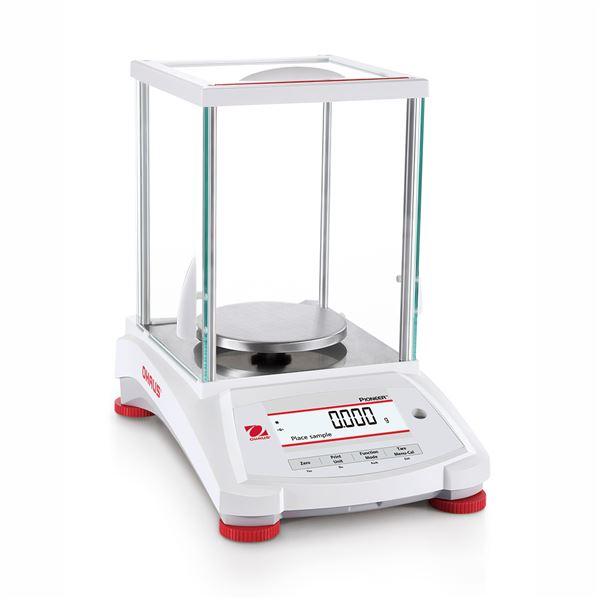
The Ohaus Pioneer series is one of the most popular analytical balance lines for routine laboratory applications. These balances are designed to deliver dependable performance with straightforward operation, making them ideal for teaching labs, quality control environments, and general analytical work. Pioneer models typically feature internal calibration options, fast stabilization times, and intuitive touch controls. Many labs choose Ohaus Pioneer balances because they provide solid accuracy at a competitive price point, making them a practical choice for facilities that need reliable results without investing in ultra-premium systems.
Sartorius
Sartorius analytical balances are widely recognized for their high-end engineering and exceptional measurement performance. They are commonly used in pharmaceutical, biotech, and advanced research laboratories where regulatory compliance and ultra-low uncertainty are critical. Sartorius instruments often include advanced draft shield designs, highly sensitive weighing cells, and sophisticated software features that support GLP/GMP workflows. While they typically come at a higher price point than Ohaus models, many labs justify the investment due to Sartorius’s reputation for precision, stability, and long-term performance in demanding environments.

Lab Balances Feature Comparison
When comparing Ohaus vs Sartorius balances, several key features should be evaluated. Ohaus balances generally emphasize ease of use, durability, and cost efficiency, making them attractive for routine workflows and multi-user labs. Sartorius balances tend to lead in ultra-fine readability, advanced user management, and high-end environmental filtering technologies. Both brands offer internal calibration, RS-232/USB connectivity, and compliance support, but Sartorius typically provides more advanced data integrity and audit trail capabilities. The best choice depends on whether your lab prioritizes value and simplicity or maximum precision and advanced compliance tools.
Analytical Balance Performance Factors
Regardless of brand, analytical balance performance depends heavily on environmental control and proper setup. A common source of measurement drift is static electricity, which can be mitigated using static removal bars. Environmental factors can skew results in analytical balances, making environmental immunity a key feature. Key factors include draft protection, vibration isolation, temperature stability, and proper calibration routines. Temperature changes can affect measurement accuracy, and some balances use calibration systems that automatically adjust for these fluctuations to maintain reliability. Even the most advanced Sartorius or Ohaus balance will produce unstable readings if placed near HVAC vents or heavy foot traffic. Labs should also evaluate stabilization time, repeatability, and linearity specifications when comparing models. In many routine environments, both Ohaus and Sartorius balances can meet accuracy requirements when properly installed and maintained.

Laboratory Balance Applications
Laboratory balances are indispensable tools in modern laboratory settings, supporting a wide range of applications from basic weighing to highly specialized tasks. Analytical balances are particularly valued for their ability to deliver precise measurements, making them essential for density determination, percentage weighing, and parts counting. These applications are critical for laboratory professionals who require accurate weighing results and data integrity in research, quality control, and production environments.
Key features such as internal calibration, robust construction, and intuitive controls ensure that laboratory balances remain a dependable choice for accurately measuring samples, even in challenging environments. Advanced connectivity options, including USB and Ethernet, allow seamless integration with laboratory information management systems (LIMS) and other instruments, streamlining workflows and supporting data traceability.
For budget conscious labs, the Ohaus Pioneer Series stands out for its uncomplicated performance and reliable accuracy at an accessible price point. Its user friendly interface and straightforward operation make it ideal for routine tasks and basic weighing.
When selecting a laboratory balance, it is essential to consider specific requirements such as capacity, readability, and calibration options. For example, the Sartorius Cubis II offers a modular design and advanced connectivity, making it a top choice for lab managers who prioritize high precision and data integrity.
Laboratory balances are designed to provide accurate and reliable results across a wide range of tasks, from research and development to routine quality control. Their robust construction and advanced technology ensure performance and durability, even in demanding laboratory environments. By carefully evaluating features such as internal calibration, connectivity, and user friendly features, laboratory professionals can select the best analytical balance brand and model to meet their specific needs.
In summary, laboratory balances are essential instruments for achieving accurate, reproducible science. Whether your focus is on basic weighing, density determination, or specialized applications, choosing the right balance—tailored to your laboratory’s requirements—ensures reliable results and supports the integrity of your research and quality processes.
Best Analytical Balance For Different Lab Types
Different laboratory environments benefit from different balance strengths. Teaching labs, industrial QC labs, and budget-conscious facilities often find Ohaus balances to be the best fit due to their durability and strong value. Pharmaceutical labs, biotech research centers, and highly regulated environments frequently prefer Sartorius balances because of their advanced compliance features and superior sensitivity. Food testing and environmental labs may fall in between, where either brand can perform well depending on the required readability and throughput needs.

Buying Checklist For Analytical Balance
Before purchasing an analytical balance, labs should verify several critical points. Confirm the required readability and capacity for your application. Evaluate whether internal or external calibration is needed. Review environmental conditions where the balance will be installed. Check connectivity requirements for LIMS or data logging. Consider service and calibration support availability. Finally, compare total cost of ownership rather than just the initial price. Following this checklist helps ensure your chosen Ohaus or Sartorius balance will meet both current and future laboratory needs.
Final Recommendation
Both Ohaus and Sartorius produce excellent analytical balances, but the better choice depends on your lab’s priorities. If your facility needs reliable, user-friendly performance at a strong value, Ohaus balances—especially the Pioneer series—are often the smart choice. If your lab operates in highly regulated, research-intensive, or ultra-precision environments, Sartorius balances may justify their premium price through superior sensitivity and advanced compliance features. For many laboratories, the optimal strategy is to match the instrument to the application rather than simply choosing the most expensive option. Working with an experienced supplier like Data Support Company (DSC Balances) can help ensure you select the right balance for accuracy, compliance, and long-term lab efficiency.
Frequently Asked Questions
Are Ohaus scales good?
Yes, Ohaus scales are widely regarded as reliable and user-friendly instruments for laboratory and industrial use. They are known for consistent accuracy, durable construction, and strong value for routine weighing applications. Many laboratories choose Ohaus balances because they deliver dependable performance without the premium cost of ultra-high-end systems.
Which balance is commonly used in laboratories?
The analytical balance is the most commonly used balance in laboratories that require high precision measurements. For less sensitive tasks, many labs also use precision balances depending on the needed capacity and readability. The choice ultimately depends on the specific application requirements.
Which balance is the most commonly used balance in a clinical laboratory?
In clinical laboratories, analytical balances are most commonly used for preparing reagents, samples, and formulations that demand high accuracy. Precision balances may also be used for routine weighing tasks. The exact selection depends on the lab’s required level of sensitivity and workflow needs.
What is the most accurate electronic balance?
The most accurate electronic balances are ultra-micro and micro analytical balances, which can measure extremely small masses down to the microgram level. Premium models from manufacturers like Sartorius and Ohaus are designed for maximum sensitivity and stability. The best option depends on the lab environment and required measurement precision.