
Introduction to Measure Weight and Mass Measurement
The terms “weight” and “mass” are often used interchangeably, but they have distinct meanings in the context of measurement - weight refers to the force exerted by gravity, while mass is a measure of the amount of matter in an object.
Understanding the difference between weight and mass is crucial in selecting the right weighing equipment, whether it’s a balance or a scale, for industrial, laboratory, or household use. Choosing the appropriate weighing solution requires understanding the technical and practical differences between various types of weighing devices, such as scales and balances, to ensure the equipment meets your specific requirements.
Scales and Balances each play distinct roles in measurement: balances are typically used for precise mass determination in laboratory and scientific settings, while scales are more common for general weight measurement in commercial and industrial environments.
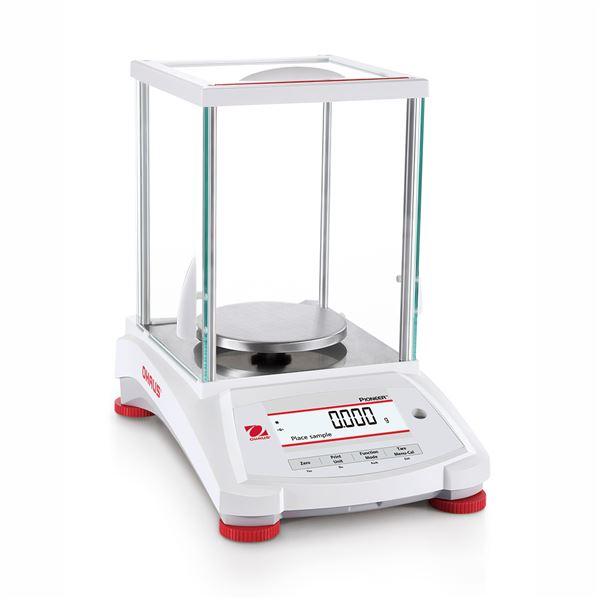
Precision Balances, such as analytical balances, are designed to measure mass with high accuracy, making them ideal for scientific research and laboratory settings. Balances are generally more precise than scales, especially for small measurements.
Digital scales, on the other hand, measure weight and are commonly used in household settings, commercial environments, and industrial applications. Scales are commonly used in commercial and industrial settings for weighing larger items.
The choice between a balance and a scale depends on the specific needs of the user, including the type of object being weighed, the desired level of accuracy, and the environment in which the weighing will take place. The difference between a balance and a scale lies in their measurement methods: a balance measures mass directly and offers higher precision, while a scale measures force (weight) and is typically used for larger capacities.
When selecting a weighing device, it is important to consider key features such as sensitivity, accuracy, durability, and resistance to environmental factors. Evaluating these key features will help ensure you choose the right weighing device for your application.
Understanding Analytical Balances
Balances are designed to measure mass, especially Analytical Balances, by comparing an unknown mass to a known mass, using a force restoration mechanism or a tuning-fork mechanism to achieve precise measurements.
Traditional balances, such as triple beam balances, use a mechanical system to compare masses, while modern balances use advanced technology, such as load cells and electronic components.
Balances typically serve in laboratory settings where high accuracy and precision are required, and are often used for measuring smaller masses, such as in chemical analysis or pharmaceutical applications. Weighing objects with high precision is essential in these environments.
Mass balances, such as semi-micro balances, are designed to measure very small masses with high accuracy, making them ideal for applications where precise measurements are critical. Particularly analytical balances are essential for measuring minute quantities in scientific and laboratory settings.
Balances can detect and display smaller increments, which is critical for measuring minute quantities accurately. Advanced balances are capable of measuring in the microgram range, which is especially important for scientific and pharmaceutical applications.
Balances often include advanced functions like specific gravity weighing and mass unit conversion, as well as percentage weighing, to facilitate a wide range of laboratory measurements.

Balancing instruments typically cost more due to their advanced precision technology. Precision balances offer higher readability and can weigh in minute increments, making them ideal for accurately weighing small quantities.
Unlike scales, balances are not affected by changes in gravity, making them suitable for use in different locations and environments.
Understanding Digital Scales
Scales, on the other hand, measure weight—meaning a scale measures weight by detecting the force acting on an object due to gravity. Scales work by measuring force: the force acting on an object is converted into a weight value, which is the product of mass and gravitational acceleration.
Digital scales use electronic components to display the weight reading, while mechanical scales, such as spring scales, use a mechanical system to estimate weight. In digital models, the force exerted on the load cell is converted into an electrical signal, which is then processed to provide an accurate weight reading. Accurate weight reading is critical in laboratory, medical, and industrial settings where precision is required.
Industrial scales are designed for heavy-duty applications, offering durability, high capacity, accuracy, and customization options for manufacturing, automation, laboratories, and other industrial environments. For household use, common examples of weighing machines include the bathroom scale for personal weight measurement and the kitchen scale for precise ingredient measurement. The term weighing scale covers a wide variety of weighing machines, from small kitchen scales to large industrial platforms.
Scales are designed to handle larger weights, typically having a higher capacity than balances, and are necessary for heavy-duty loads ranging from 100kg to thousands of tons, whereas balances often top out at low capacities (under 120kg). Scales are often used in shipping and logistics to measure the weight of products for proper freight classification and cost calculations.
Balances and Scales: Key Concepts
When considering Balances and Scales, it’s important to recognize that, while both are types of weighing equipment, they operate on distinct principles and are suited to different tasks. The technical and practical differences between balances and scales stem from the way each device measures: balances determine mass by comparing an unknown mass to a known reference, while scales measure weight by assessing the force exerted by gravity on an object.

These practical differences influence where and how each device is used. Balances, especially in laboratory environments, are chosen for their ability to provide highly accurate mass measurements, making them the right weighing equipment for scientific research and quality control. Scales, on the other hand, are often selected for general weighing tasks in commercial, industrial, or household settings, where measuring weight quickly and efficiently is the priority.
Understanding these key concepts helps users select the right weighing equipment for their specific needs. Whether you require the precision of balances and scales for laboratory analysis or the convenience of a scale for everyday use, knowing the technical and practical differences ensures accurate results and optimal performance in any weighing process.
Precision and Accuracy
Precision Balances, such as analytical balances, are designed to provide high accuracy and precision, making them ideal for scientific research and laboratory settings. For laboratory use, these instruments are specialized to deliver reliable results where high precision is required.
Digital scales, on the other hand, may have lower accuracy and precision, but are often sufficient for commercial and industrial applications.
The accuracy of a balance or scale depends on various factors, including the quality of the instrument, the environment in which it is used, and the maintenance and calibration of the device. Environmental conditions, such as temperature, humidity, and air currents, can significantly impact measurement accuracy. Using balances in controlled environments helps minimize these influences and ensures precise measurements, especially in laboratory use. Many precision balances feature temperature compensation to maintain accuracy despite fluctuations in environmental conditions.
To ensure accuracy, it is recommended to weigh in the middle of a device's capacity range. Balances often top out at low capacities (under 120kg), while scales are necessary for heavy-duty loads ranging from 100kg to thousands of tons.
Regular calibration and maintenance are essential to ensure the accuracy and precision of weighing equipment, whether it’s a balance or a scale.
High precision and accuracy are critical in applications where small changes in weight or mass can have significant consequences, such as in pharmaceutical or chemical manufacturing.

Frequently Asked Questions
What is the main difference between a balance and a scale?
A balance measures mass by comparing an object to a known reference and offers higher precision. A scale measures weight, which is the force of gravity acting on an object, and is commonly used for larger loads.
When should I use a balance instead of a scale?
A balance should be used when high accuracy and precision are required, such as in laboratory, pharmaceutical, or research applications. Balances are ideal for measuring small quantities with fine readability.
Are scales affected by gravity while balances are not?
Yes, scales are affected by gravity and may require calibration when used in different locations. Balances measure mass and are not influenced by gravity, making them suitable for consistent measurements across environments.
How do I choose the right weighing equipment for my application?
Choosing between a balance and a scale depends on capacity, required accuracy, and usage environment. Use balances for precise mass measurement and scales for general or heavy-duty weight measurement.